Can implant parts be removed easily?
As a long - time supplier of implant parts, I've encountered numerous inquiries from dental professionals, patients, and even those in the medical research field regarding the ease of removing implant parts. This is a crucial topic, as the ability to remove these components can significantly impact patient health, treatment success, and overall satisfaction.


Implant parts come in a wide variety, including Pre Milled Abutment, Dentium Closed Impression Coping, and Dentium Titanium Scanbody. Each type serves a specific function in the implant process, and their removal is not a one - size - fits - all scenario.
Factors Affecting the Ease of Implant Part Removal
1. Implant Design and Integration
Modern implant designs are engineered to achieve osseointegration, which is the direct structural and functional connection between living bone and the surface of a load - bearing artificial implant. When an implant part is well - integrated with the bone, it provides stability and long - term support for dental restorations. However, this very integration can make removal a complex procedure.
For instance, some implants have a threaded design that allows for better anchoring in the bone. While this enhances stability during normal use, removing a threaded implant requires specialized tools and techniques. The threads grip the bone tightly, and extracting the implant without causing damage to the surrounding bone tissue can be challenging. On the other hand, some non - threaded implants may be easier to remove in certain cases, but they may also have lower initial stability.
2. Healing Time
The length of time since the implant was placed plays a significant role in the ease of removal. In the early stages after implantation, the implant has not fully integrated with the bone. During this period, if there is a need to remove the implant due to complications such as infection or incorrect placement, the removal process may be relatively straightforward.
As time passes and osseointegration progresses, the implant becomes more firmly attached to the bone. After several months or years, the bone grows around the implant, creating a strong bond. Removing an implant at this stage requires more careful planning and may involve additional steps to preserve the integrity of the surrounding bone.
3. Complications and Pathology
Complications such as peri - implantitis, which is an inflammatory condition affecting the tissues around an implant, can make removal more difficult. Peri - implantitis can lead to bone loss around the implant, making it less stable but also causing the surrounding tissues to be inflamed and more fragile.
In cases where there is an infection, the presence of bacteria and inflamed tissue can increase the risk of spreading the infection during the removal process. Additionally, if there are anatomical factors such as proximity to vital structures like nerves or sinuses, the removal procedure must be carefully planned to avoid damage to these structures.
Removal Procedures for Different Implant Parts
1. Abutments
Abutments are the components that connect the implant fixture to the dental restoration, such as a crown or a bridge. In general, abutments are designed to be removable for maintenance, repair, or replacement of the restoration. Most abutments are attached to the implant fixture using a screw or a friction - fit mechanism.
Removing a screw - retained abutment typically involves using a specialized screwdriver to loosen the screw. The process is relatively simple and can be performed in a dental office. Friction - fit abutments, on the other hand, require a gentle force to dislodge them from the implant. Specialized instruments are used to apply the appropriate amount of force without damaging the implant or the surrounding tissues.
2. Impression Copings
Dentium Closed Impression Coping is used to take accurate impressions of the implant position in the mouth. These copings are usually designed to be easily removable after the impression is taken. They are often attached to the implant with a snap - fit or a screw - type mechanism.
Removing a snap - fit impression coping can be done by gently pulling it off the implant. For screw - attached impression copings, a screwdriver is used to remove the screw, and then the coping can be lifted away.
3. Scanbodies
Dentium Titanium Scanbody is used in digital dentistry for obtaining precise 3D images of the implant position. Similar to impression copings, scanbodies are designed to be removable. They are typically attached to the implant using a simple attachment mechanism, and removal can be accomplished with the appropriate tools.
Techniques for Minimizing Complications During Implant Part Removal
1. Pre - operative Planning
Before removing an implant part, a thorough pre - operative assessment is essential. This includes taking detailed X - rays, such as panoramic X - rays or cone - beam computed tomography (CBCT) scans, to evaluate the position of the implant, the amount of surrounding bone, and the proximity to vital structures.
Based on the pre - operative assessment, a treatment plan can be developed. This plan may include the choice of appropriate tools, the sequence of the removal procedure, and measures to minimize the risk of complications.
2. Use of Specialized Tools
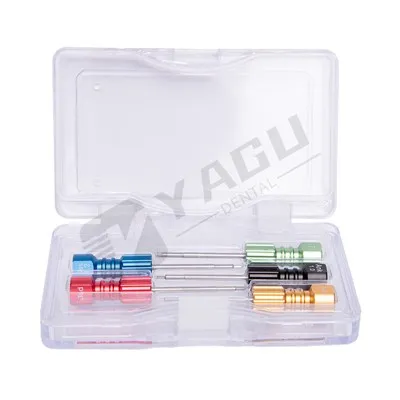
There are a variety of specialized tools available for implant part removal. These tools are designed to be precise and gentle, minimizing damage to the surrounding tissues. For example, implant removal kits often include drills, reamers, and extraction forceps that are specifically designed for different types of implants.
Some advanced tools use ultrasonic technology to break the bond between the implant and the bone. Ultrasonic instruments can selectively disrupt the bone - implant interface without causing excessive damage to the surrounding bone.
3. Post - operative Care
After the implant part is removed, proper post - operative care is crucial to ensure a smooth recovery. This includes providing appropriate pain management, antibiotics if necessary, and instructions on oral hygiene.
The patient should be monitored closely for any signs of complications such as bleeding, infection, or excessive swelling. In some cases, additional procedures may be required to promote bone healing and prepare the site for future implant placement if desired.
Conclusion
In conclusion, the ease of removing implant parts depends on a variety of factors, including implant design, healing time, complications, and the type of implant part. While some implant parts, such as abutments, impression copings, and scanbodies, are generally designed to be removable, the removal of the implant fixture itself can be a more complex procedure, especially when the implant is well - integrated with the bone.
As a supplier of implant parts, we understand the importance of providing high - quality products that are not only effective but also easy to manage in case of complications. We work closely with dental professionals to ensure that they have access to the latest information and tools for implant part removal.
If you are a dental professional or involved in the medical field and are interested in learning more about our implant parts or have questions regarding removal procedures, we encourage you to reach out to us for further discussion and potential procurement. We are committed to providing the best solutions for your implant needs.
References
- Albrektsson, T., & Wennerberg, A. (2004). Oral implant surfaces: Part 1 - review focusing on topographical and chemical properties of different surfaces and in vivo responses to them. International Journal of Prosthodontics, 17(5), 536 - 543.
- Buser, D., Martin, W., & Belser, U. C. (2004). Optimizing esthetics for implant restorations with short clinical crowns: anatomic and surgical considerations. The International Journal of Oral & Maxillofacial Implants, 19(Suppl), 43 - 61.
- Misch, C. E. (2010). Dental implant prosthetics. Mosby.