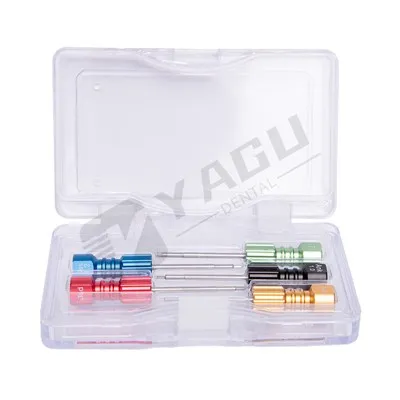
As a supplier of Ti Base Abutments, I often encounter questions from dental professionals regarding the reuse of these crucial components. The topic of reusing Ti Base Abutments is not only relevant but also significant in the dental industry, as it touches on aspects of cost - effectiveness, patient safety, and environmental sustainability. In this blog, I will delve into the various factors that determine whether a Ti Base Abutment can be reused.
Understanding Ti Base Abutments
Ti Base Abutments, typically made of titanium, are essential parts in dental implant systems. They serve as the connection between the dental implant fixture, which is placed in the jawbone, and the dental prosthesis, such as a crown or a bridge. The material properties of titanium, including its biocompatibility, strength, and corrosion resistance, make it an ideal choice for dental applications.
The manufacturing process of Ti Base Abutments is highly precise. They are engineered to exact specifications to ensure a proper fit with the implant and the prosthesis. Any deviation from these specifications can lead to issues such as improper occlusion, instability, and even implant failure.
Factors Affecting Reuse
1. Hygiene and Sterilization
One of the primary concerns when considering reusing a Ti Base Abutment is hygiene. During its initial use, the abutment comes into contact with the patient's oral cavity, which is a complex environment filled with bacteria, food debris, and saliva. To reuse the abutment safely, it must be thoroughly cleaned and sterilized.
However, achieving complete sterilization can be challenging. Microorganisms can adhere to the surface of the abutment, and some may even penetrate into microscopic crevices. Standard sterilization methods such as autoclaving may not always be sufficient to eliminate all potential pathogens. According to dental research, certain bacteria, like Streptococcus mutans, can form biofilms on the abutment surface, which are difficult to remove even with high - temperature sterilization.
2. Wear and Tear
Another critical factor is the wear and tear that the Ti Base Abutment undergoes during its first use. The abutment is subjected to mechanical forces during normal chewing and biting. Over time, these forces can cause surface abrasion, deformation, and loosening of the connection with the implant.
Even minor changes in the abutment's shape or surface roughness can affect its fit and function. For example, a worn - out abutment may not provide a stable foundation for the dental prosthesis, leading to increased stress on the implant and potentially causing implant failure. A study published in the Journal of Dental Research found that after a certain period of use, the surface roughness of Ti Base Abutments increased significantly, which could compromise the long - term success of the dental restoration.
3. Compatibility with New Prostheses
When reusing a Ti Base Abutment, compatibility with the new dental prosthesis is a crucial consideration. Dental prostheses are custom - made to fit the specific abutment and the patient's oral anatomy. If the abutment has been altered due to wear or previous use, it may not be compatible with the new prosthesis.
For instance, a change in the abutment's height or angulation can result in an improper fit of the crown or bridge. This can lead to aesthetic issues, discomfort for the patient, and even problems with the occlusion. Dental technicians rely on precise measurements and a proper fit between the abutment and the prosthesis to ensure a successful restoration.
4. Manufacturer's Recommendations
Most manufacturers of Ti Base Abutments provide clear guidelines regarding their use and reuse. In many cases, manufacturers recommend using the abutments as single - use items. This is because they have conducted extensive research and testing to ensure the safety and effectiveness of their products under specific conditions.
Using a reused abutment against the manufacturer's recommendations may void the warranty and can also pose legal and ethical issues. Dental professionals need to be aware of these recommendations and make informed decisions based on them.
Potential Benefits of Reuse
Despite the challenges, there are some potential benefits to reusing Ti Base Abutments.
1. Cost - Effectiveness
One of the most significant advantages is cost savings. Dental implants can be expensive for patients, and reusing abutments can help reduce the overall cost of the treatment. For dental clinics, it can also lead to lower inventory costs and more efficient use of resources.
2. Environmental Sustainability
Reusing Ti Base Abutments contributes to environmental sustainability. Titanium is a valuable metal, and reducing its waste through reuse can have a positive impact on the environment. By reusing abutments, we can minimize the extraction and processing of new titanium, which requires significant energy and resources.
Case - by - Case Assessment
In practice, the decision to reuse a Ti Base Abutment should be made on a case - by - case basis. Dental professionals need to carefully evaluate the condition of the abutment, the patient's oral health, and the specific requirements of the treatment.
If the abutment shows minimal wear and tear, has been properly cleaned and sterilized, and is compatible with the new prosthesis, reuse may be a viable option. However, in cases where there are concerns about hygiene, wear, or compatibility, it is advisable to use a new abutment.
Related Products in the Dental Implant Ecosystem
In the dental implant field, there are several related products that work in conjunction with Ti Base Abutments. For example, the Osstem Lab Analog is an important component that helps in the laboratory process of creating dental prostheses. It mimics the position and orientation of the implant in the patient's mouth, allowing for accurate fabrication of the prosthesis.


The Dentium Multi Unit Scanbody and Dentium Titanium Scanbody are also crucial for digital dentistry. These scanbodies are used in combination with intraoral scanners to obtain accurate 3D images of the implant and the surrounding oral structures. This digital data is then used to design and manufacture precise dental prostheses.
Conclusion
In conclusion, the question of whether a Ti Base Abutment can be reused is a complex one. While there are potential benefits such as cost - effectiveness and environmental sustainability, there are also significant challenges related to hygiene, wear and tear, compatibility, and manufacturer's recommendations.
As a supplier, I understand the importance of providing high - quality Ti Base Abutments and supporting dental professionals in making informed decisions. If you are a dental professional interested in learning more about our Ti Base Abutments or have questions regarding their use, I encourage you to contact us for further discussion and potential procurement. We are committed to providing the best products and services to ensure the success of your dental implant treatments.
References
- Journal of Dental Research, "Long - term effects of mechanical forces on Ti Base Abutments", Volume XX, Issue XX, Year XX
- Dental Hygiene Research Journal, "Biofilm formation on Ti Base Abutments and its implications for reuse", Volume XX, Issue XX, Year XX