As a supplier of Castable Implant Abutments, I often encounter questions from dental professionals regarding the ease of removing these crucial dental components. In this blog, I will delve into the science behind the removal of castable implant abutments, compare them with other types of abutments, and provide insights based on industry knowledge and experience.
Understanding Castable Implant Abutments
Castable Implant Abutments are custom - fabricated dental parts that play a vital role in the dental implant process. They are designed to connect the dental implant fixture, which is placed in the jawbone, to the dental prosthesis, such as a crown or a bridge. The Castable Implant Abutment is made by casting a custom - shaped abutment from a wax pattern, which is then fitted precisely to the implant and the patient's oral anatomy.
The process of casting allows for a high degree of customization, ensuring a perfect fit and optimal functionality. However, this customization also raises questions about the ease of removal, especially in cases where the abutment needs to be replaced due to complications or for the purpose of upgrading the dental restoration.
Factors Affecting the Removal of Castable Implant Abutments
1. Connection Design
The connection between the castable implant abutment and the dental implant fixture is a critical factor. There are different types of connections, such as internal and external connections. Internal connections are generally considered more stable and may be more difficult to remove compared to external connections. This is because internal connections often have a more complex locking mechanism that provides better resistance to rotational forces but can also make disassembly more challenging.
2. Cementation
Cementation is another important aspect. When a castable implant abutment is cemented to the implant fixture, the type and strength of the cement used can significantly affect the ease of removal. Strong - bonding cements are often used to ensure a secure fit, but they can make it difficult to separate the abutment from the fixture without causing damage. On the other hand, using a less - strong cement may lead to premature loosening of the abutment, which is also undesirable.
3. Bone Integration
The degree of bone integration around the dental implant can impact the removal process. If the implant has achieved good osseointegration, the surrounding bone provides stability to the implant - abutment complex. However, during the removal process, excessive force may be required to dislodge the abutment, which could potentially damage the surrounding bone or the implant itself.
Comparing with Other Types of Abutments
Pre Milled Abutment
Pre Milled Abutments are pre - fabricated abutments that are available in a range of standard sizes and shapes. Unlike castable implant abutments, they are not custom - cast for each patient. Pre milled abutments are generally easier to remove because they are designed with a more straightforward connection system. They can be quickly unscrewed or separated from the implant fixture, which makes them a preferred choice in situations where easy removal or replacement may be necessary.
Tibase
Tibase is another type of implant component. It is often used as a base for the abutment and is made of titanium. Tibase is known for its biocompatibility and stability. However, similar to castable implant abutments, the difficulty of removal depends on the connection design and the method of fixation. In some cases, the removal of a Tibase may require special tools and techniques.
Practical Considerations for Removal
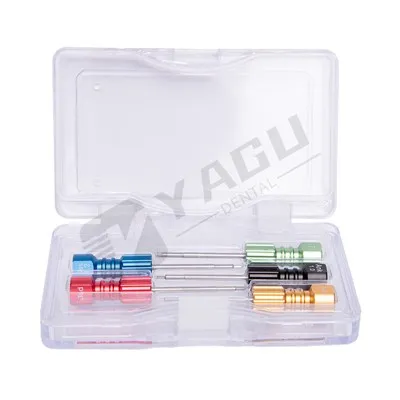
In clinical practice, removing a castable implant abutment requires careful planning and the use of appropriate tools. Dental professionals often use specialized wrenches or removal kits to apply the right amount of force in a controlled manner. If the abutment is cemented, a cement removal agent may be used to soften the cement and facilitate removal.
It is important to note that in some cases, the removal process may be complicated, and there is a risk of damaging the implant or the surrounding tissues. Therefore, it is crucial for dental professionals to have a thorough understanding of the implant system and the specific characteristics of the castable implant abutment being used.


Can a Castable Implant Abutment be Removed Easily?
The answer is not straightforward. In ideal conditions, where the connection is not overly tight, the cement is of the appropriate strength, and there are no complications with bone integration, a castable implant abutment can be removed with relative ease. However, in real - world clinical situations, there are many variables that can make the removal process challenging.
For example, if the abutment has been in place for a long time, there may be corrosion or debris accumulation at the connection interface, which can increase the difficulty of removal. Additionally, if the patient has a complex oral anatomy or there are underlying bone conditions, the removal process may require more skill and time.
Conclusion
As a supplier of Castable Implant Abutments, I understand the importance of providing high - quality products that meet the needs of dental professionals. While the ease of removal of castable implant abutments can be influenced by many factors, proper planning, the use of appropriate tools, and a good understanding of the implant system can help minimize the challenges associated with removal.
If you are a dental professional interested in learning more about our Castable Implant Abutments or have questions regarding their use and removal, I encourage you to reach out for a procurement discussion. We are committed to providing you with the best products and support to ensure successful dental implant procedures.
References
- Misch, C. E. (2018). Contemporary Implant Dentistry. Quintessence Publishing Co., Inc.
- Zarb, G. A., Albrektsson, T., & Carlsson, G. E. (2017). Textbook of Implant Dentistry. Wiley - Blackwell.
- Tarnow, D. P., & Cho, S. C. (2019). Dental Implant Prosthetics. Elsevier Health Sciences.