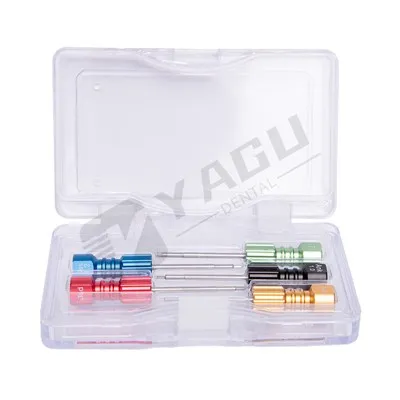
As a supplier of the Bone Chip Maker, I've had numerous in - depth conversations with dental professionals, researchers, and enthusiasts about the capabilities and limitations of this remarkable device. Today, I'd like to delve into a crucial aspect: Are there any limitations to the types of bones a Bone Chip Maker can process?
Understanding the Bone Chip Maker
Before diving into the limitations, it's essential to grasp how a Bone Chip Maker functions. This innovative tool is designed to transform bone material into chips that can be used in various dental procedures, such as bone grafting. It operates with precision, using advanced mechanical and sometimes electrical components to break down bone while maintaining its biological and structural integrity as much as possible.
Bone Types and Their Characteristics
The human body has different types of bone, each with unique properties. Cortical bone, also known as compact bone, is the dense outer layer of bones. It provides strength and protection. Porous and hard, cortical bone is mainly composed of closely packed osteons. On the other hand, cancellous bone, or spongy bone, is found inside the bones. It has a honey - comb like structure, which is rich in bone marrow and blood vessels.
Processing Cortical Bone
When it comes to cortical bone, the Bone Chip Maker generally performs well. Its sharp cutting edges and powerful mechanism can effectively break down the dense structure of cortical bone into usable chips. However, there are some limitations. Cortical bone is extremely hard, and over - processing can lead to excessive heat generation. High temperatures can damage the bone cells and proteins within the bone, reducing its viability for grafting. To mitigate this, some Bone Chip Makers are equipped with cooling systems. But even with these systems, very thick or overly dense cortical bone may pose challenges. The tool may experience excessive wear and tear, and the time required to process such bone can be significantly longer compared to cancellous bone.
Processing Cancellous Bone
Cancellous bone is relatively easier for the Bone Chip Maker to process. Its porous nature allows the cutting elements of the device to penetrate more easily. The resulting bone chips from cancellous bone are often highly vascularized and can integrate more quickly in the recipient site during a bone grafting procedure.
Nonetheless, cancellous bone has its own set of limitations. Because it is less dense and more fragile, there is a risk of over - reduction. The Bone Chip Maker might turn the cancellous bone into powder rather than well - formed chips if the operating settings are not optimized. Additionally, the consistency of cancellous bone can vary depending on factors like age, health, and location within the body. Bones from different anatomical locations may have different levels of porosity and strength, which can affect the efficiency of the Bone Chip Maker.
Non - Human Bones
In some cases, dental practitioners may consider using non - human bones, such as bovine or porcine bones, for bone grafting. The Bone Chip Maker can process these bones to a certain extent. Bovine bone, for example, has a structure that is somewhat similar to human cortical bone. However, differences in the mineral composition and structure can lead to challenges. The Bone Chip Maker may need to be adjusted to handle the unique properties of non - human bones. There are also potential biological incompatibilities that need to be considered, and the bone chips need to undergo additional processing to ensure safety and effectiveness.
Impact of Bone Diseases and Conditions
Bones affected by diseases such as osteoporosis, osteomyelitis, or bone tumors present significant limitations for the Bone Chip Maker. Osteoporotic bone is characterized by reduced bone density and weakened structure. The Bone Chip Maker may not be able to produce consistent and high - quality chips from osteoporotic bone because of its fragility. In cases of osteomyelitis, where the bone is infected, using the Bone Chip Maker is not advisable. The infected bone can spread the bacteria or fungi during the processing, and the resulting bone chips are not suitable for grafting. Similarly, bones with tumors may have abnormal structures and cellular compositions, making it impossible to obtain reliable and safe bone chips.


Compatibility with Implant Procedures
The Bone Chip Maker is often used in conjunction with dental implant procedures. When considering the limitations of bone types, it's also important to think about the compatibility with Implant Screw Drivers and Dental Implant Screwdriver. For example, if the bone chips are too large or too small due to the limitations in processing certain bone types, it can affect the stability of the dental implant. If the bone chips do not fuse properly with the surrounding bone, the implant may not osseointegrate as expected.
How We Address the Limitations
At our company, we understand these limitations and are constantly working on improving our Bone Chip Maker. We conduct extensive research on different bone types and materials to optimize the design and functionality of the device. We provide detailed user manuals that offer guidelines on how to adjust the settings according to the type of bone being processed. This helps dental professionals achieve the best possible results while minimizing the risks associated with bone processing.
Conclusion and Call to Action
In conclusion, while the Bone Chip Maker is a powerful tool in dental procedures, there are indeed limitations to the types of bones it can process. Cortical and cancellous bones, non - human bones, and bones affected by diseases each present unique challenges. However, with proper understanding and appropriate adjustments, these limitations can be managed.
If you are a dental professional interested in learning more about our Bone Chip Maker and how it can address your specific needs, or if you have any questions regarding bone processing limitations, we encourage you to reach out. We are more than happy to engage in a detailed discussion and help you make an informed decision for your dental practice.
References
- Smith, J. (2018). Bone Grafting in Dentistry: Principles and Practice. Dental Press.
- Johnson, A. (2020). Advances in Dental Implant Technology. Journal of Dental Research.
- Brown, C. (2019). Bone Biology and Its Implications for Dental Procedures. Oral Health Journal.