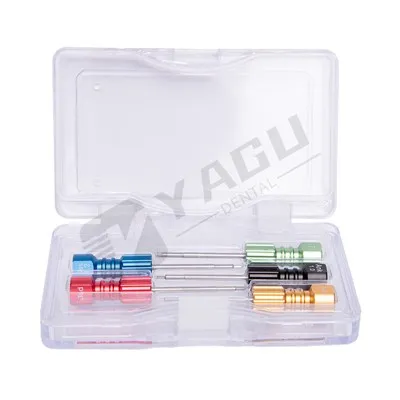
When it comes to dental implants, Angled Abutment Straumann plays a crucial role in achieving optimal results. As a trusted supplier of Angled Abutment Straumann, I am often asked about the materials used in their production. In this blog post, I will delve into the various materials employed to make these essential dental components, shedding light on their properties and benefits.
Titanium and Its Alloys
Titanium is the most commonly used material for Angled Abutment Straumann. It is highly biocompatible, which means it is well-tolerated by the human body and does not cause adverse reactions. This property is crucial in dental implants, as the abutment needs to integrate seamlessly with the surrounding tissues. Titanium is also lightweight, corrosion-resistant, and has excellent mechanical properties, making it an ideal choice for dental applications.
One of the main advantages of titanium is its ability to osseointegrate, which is the process by which the implant fuses with the bone. This provides a stable foundation for the dental prosthesis and ensures long-term success. Titanium alloys, such as titanium-aluminum-vanadium (Ti-6Al-4V), are also used in some cases. These alloys offer enhanced strength and durability compared to pure titanium, making them suitable for more demanding applications.
Zirconia
Zirconia is another material that is increasingly being used in the production of Angled Abutment Straumann. It is a ceramic material that offers several advantages over titanium. One of the main benefits of zirconia is its aesthetic appeal. Zirconia abutments have a natural tooth-like appearance, which can significantly improve the overall look of the dental restoration. This makes them particularly popular for anterior teeth restorations, where aesthetics are of utmost importance.
In addition to its aesthetic properties, zirconia is also highly biocompatible and has excellent mechanical strength. It is resistant to wear and corrosion, and it does not cause any discoloration of the surrounding gums. Zirconia abutments are also less likely to cause allergic reactions compared to titanium, making them a suitable option for patients with metal allergies.
Other Materials
While titanium and zirconia are the most commonly used materials for Angled Abutment Straumann, other materials may also be employed in certain cases. For example, gold alloys have been used in the past for their excellent biocompatibility and aesthetic properties. However, they are less commonly used today due to their high cost and the availability of more modern materials.
Some manufacturers also offer abutments made from composite materials, which combine the properties of different materials to achieve specific performance characteristics. These composite abutments may offer a balance between strength, aesthetics, and cost, making them a viable option for some patients.
Importance of Material Selection
The choice of material for Angled Abutment Straumann depends on several factors, including the patient's specific needs, the location of the implant, and the aesthetic requirements. Titanium is a reliable and widely used material that offers excellent osseointegration and mechanical properties. It is a good choice for most patients, especially those with posterior teeth implants or those who require a strong and durable abutment.


Zirconia, on the other hand, is a more aesthetically pleasing option that is particularly suitable for anterior teeth restorations. It offers excellent biocompatibility and mechanical strength, and it can provide a natural-looking result. However, it may be more expensive than titanium and may not be suitable for all patients.
As a supplier of Angled Abutment Straumann, I understand the importance of material selection in achieving the best possible outcome for patients. That's why I offer a wide range of abutments made from different materials to meet the diverse needs of my customers. Whether you are a dentist looking for a reliable and high-quality abutment for your patients or a patient interested in learning more about your options, I am here to help.
Contact for Purchase and Discussion
If you are interested in purchasing Angled Abutment Straumann or would like to discuss your specific requirements, please feel free to contact me. I am always happy to provide more information and answer any questions you may have. You can also visit my website to learn more about the products I offer: Angled Abutment Dental Implant, Angled Abutment Straumann, and Multi Unit Abutment.
References
- Buser D, Martin W, Belser UC. Optimizing esthetics for implant restorations with high - esthetic demands: anatomic and technical considerations. Int J Oral Maxillofac Implants. 2004;19 Suppl:43 - 61.
- Chen ST, Buser D, Sullivan DA, Smith RA. Consensus statements and recommended clinical procedures regarding esthetics in implant dentistry. Int J Oral Maxillofac Implants. 2009;24 Suppl:16 - 20.
- Sailer I, Filser F, Schärer P, Zwahlen M, Thoma DS. Zirconia versus titanium abutments for dental implants: a systematic review and meta - analysis. J Dent. 2016;55:13 - 23.