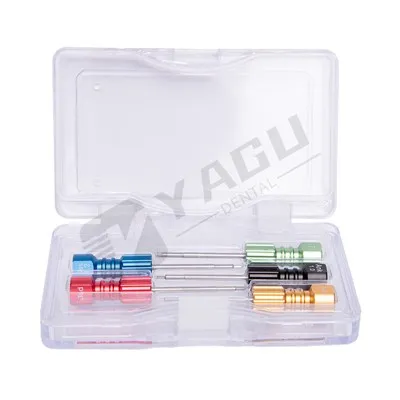
What is the role of a Ti Base Abutment in improving oral function?
As a dedicated supplier of Ti Base Abutments, I've witnessed firsthand the transformative impact these components have on oral function. In the complex world of dental implants, the Ti Base Abutment serves as a crucial link between the implant fixture and the prosthetic restoration, playing a multifaceted role in enhancing the overall functionality and quality of life for patients.
1. Structural Support and Stability
One of the primary functions of a Ti Base Abutment is to provide a stable and secure foundation for the dental prosthesis. Made from high - quality titanium, these abutments are known for their excellent mechanical properties, including high strength and corrosion resistance. Titanium has a long - standing reputation in the medical and dental fields due to its biocompatibility, which allows it to integrate well with the surrounding tissues without causing adverse reactions.
When a dental implant is placed in the jawbone, it acts as an artificial tooth root. The Ti Base Abutment is then attached to the implant, extending above the gum line. This connection must be precise and stable to support the forces exerted during chewing and speaking. A well - designed Ti Base Abutment ensures that the prosthetic tooth or bridge remains firmly in place, preventing unwanted movement or loosening. This stability is essential for proper mastication, as it allows patients to bite and chew food effectively, improving their ability to digest nutrients and enjoy a varied diet.
For example, in cases where a patient has multiple missing teeth and requires a fixed bridge, the Ti Base Abutment provides the necessary support to distribute the occlusal forces evenly across the implant and the surrounding bone. This helps to maintain the integrity of the implant - supported restoration and reduces the risk of implant failure over time.
2. Esthetics and Soft Tissue Management
In addition to its functional role, the Ti Base Abutment also plays a significant part in the esthetic outcome of dental implant treatment. The appearance of the abutment and the way it interacts with the surrounding soft tissues can greatly affect the overall look of the smile.
Modern Ti Base Abutments are designed to mimic the natural shape and color of the teeth and gums. They can be customized to match the patient's individual anatomy, ensuring a seamless transition between the implant and the adjacent teeth. This esthetic integration is crucial for patient satisfaction, as it helps to restore a natural - looking smile and boost self - confidence.
Moreover, the Ti Base Abutment influences the health and appearance of the soft tissues around the implant. A properly contoured abutment can help to guide the growth and development of the gingival tissues, creating a healthy and attractive gum line. The smooth surface of the abutment promotes good soft tissue adhesion, reducing the risk of inflammation and pocket formation. This is important for maintaining oral hygiene and preventing periodontal diseases, which can have a negative impact on the long - term success of the dental implant.
For instance, some Ti Base Abutments are designed with a micro - textured surface that encourages the attachment of the gingival fibroblasts, promoting the formation of a tight epithelial seal around the abutment. This helps to prevent bacteria from entering the implant site and reduces the risk of peri - implantitis, a common complication of dental implants.
3. Occlusal Rehabilitation and Function Restoration
The Ti Base Abutment is also involved in the process of occlusal rehabilitation, which aims to restore the proper relationship between the upper and lower teeth. After tooth loss, the occlusion can be disrupted, leading to problems such as uneven wear of the remaining teeth, temporomandibular joint (TMJ) disorders, and speech difficulties.
By providing a stable platform for the prosthetic restoration, the Ti Base Abutment allows for the precise adjustment of the occlusal contacts. This helps to re - establish a balanced bite, reducing the stress on the TMJ and improving the overall function of the masticatory system. Patients can then speak more clearly and comfortably, as the proper alignment of the teeth and the stability of the implant - supported restoration contribute to normal speech patterns.
For example, in cases where a patient has a malocclusion due to missing teeth, the use of a Ti Base Abutment in combination with a custom - fabricated prosthesis can help to correct the occlusal relationship. This may involve adjusting the height, angulation, and shape of the abutment to ensure that the prosthetic teeth fit properly with the opposing dentition.


4. Compatibility with Other Dental Implant Components
The Ti Base Abutment is an integral part of the dental implant system and must be compatible with other components such as Dentium Abutment Screw, Osstem Healing Cap, and Castable Implant Abutment. Compatibility ensures that all the components work together seamlessly, optimizing the performance and longevity of the dental implant restoration.
The connection between the Ti Base Abutment and the implant fixture is typically designed to be a precise fit, using a specific type of screw or locking mechanism. This ensures a secure and stable connection, preventing any micro - movements that could lead to implant failure or loosening of the prosthetic restoration. Similarly, the Ti Base Abutment must be compatible with the prosthetic component, whether it is a single crown, a bridge, or a denture. This allows for easy and accurate placement of the prosthesis, ensuring a proper fit and function.
For example, when using a Dentium Abutment Screw to attach the Ti Base Abutment to the implant, the screw must be of the correct size and design to ensure a tight and secure connection. Any mismatch in the components can lead to problems such as screw loosening, which can compromise the stability of the entire implant - supported restoration.
5. Long - Term Oral Health and Quality of Life
The use of Ti Base Abutments in dental implant treatment has a long - term impact on the patient's oral health and overall quality of life. By improving oral function, esthetics, and soft tissue management, these abutments help to restore the patient's ability to eat, speak, and smile with confidence.
Properly functioning dental implants supported by Ti Base Abutments can prevent further bone loss in the jaw, which is a common consequence of tooth loss. Maintaining the integrity of the jawbone is essential for the long - term success of the implant and for the overall health of the oral cavity. Additionally, the improved oral function provided by Ti Base Abutments can have a positive effect on the patient's general health, as it allows for better nutrition and digestion.
Patients who undergo dental implant treatment with Ti Base Abutments often report a significant improvement in their quality of life. They no longer have to worry about the embarrassment of missing teeth or the limitations of removable dentures. Instead, they can enjoy a normal, active lifestyle, participate in social activities, and feel more confident in their appearance.
Conclusion
In conclusion, the Ti Base Abutment plays a vital and multifaceted role in improving oral function. From providing structural support and stability to enhancing esthetics and soft tissue management, these abutments are essential components of dental implant treatment. Their compatibility with other dental implant parts ensures a seamless and effective restoration, while their long - term impact on oral health and quality of life cannot be overstated.
If you are a dental professional or a patient interested in learning more about our high - quality Ti Base Abutments, we invite you to reach out to us for a detailed discussion. Our team of experts is dedicated to providing the best solutions for your dental implant needs. We are committed to delivering products that meet the highest standards of quality and performance, and we look forward to the opportunity to work with you to achieve optimal oral health and function.
References
- Misch CE. Dental Implant Prosthetics. Mosby; 2010.
- Buser D, Martin W, Belser UC. Optimizing esthetics for implant restorations with a biologic approach: surgical and prosthetic considerations. Int J Oral Maxillofac Implants. 2004;19 Suppl:43 - 61.
- Brånemark PI, Zarb GA, Albrektsson T. Tissue - Integrated Prostheses: Osseointegration in Clinical Dentistry. Quintessence Publishing; 1985.