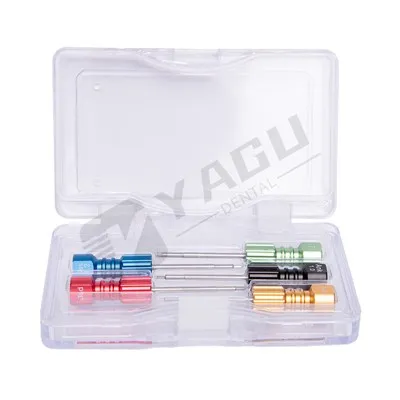
Hey there! As a supplier of implant parts, I've been keeping a close eye on the research status of these nifty little things. Implant parts are a big deal in the medical and dental fields, and the research around them is constantly evolving. Let's dig into what's going on in this exciting area.
Current Research Trends
First off, there's a huge push towards improving the biocompatibility of implant parts. You see, when you put an implant into the body, the body's immune system can sometimes go into overdrive and reject it. That's no good! So, researchers are looking at new materials and surface treatments to make implant parts more "friendly" to the body. For example, they're experimenting with coatings that mimic the body's natural tissues, which can help the implant integrate better and reduce the risk of rejection.
Another hot topic is the development of smarter implant parts. We're talking about implants that can monitor things like temperature, pressure, and even the presence of bacteria. These smart implants could provide real-time data to doctors, allowing them to detect problems early and make more informed treatment decisions. It's like having a little doctor inside the body!


Material Advancements
The materials used in implant parts have come a long way. In the past, most implants were made of metals like titanium. While titanium is still widely used because it's strong and biocompatible, researchers are exploring other options too. For instance, there's a lot of interest in using ceramics. Ceramics are not only strong and durable, but they also have a more natural appearance, which is especially important for dental implants.
There are also new composite materials being developed. These materials combine the best properties of different substances, such as the strength of a metal and the flexibility of a polymer. This can result in implant parts that are more comfortable for the patient and better able to withstand the stresses of everyday use.
Surface Modification
The surface of an implant part plays a crucial role in how well it integrates with the surrounding tissue. That's why researchers are spending a lot of time studying surface modification techniques. One popular method is to create a rough surface on the implant. This rough surface provides more area for the cells to attach to, which can speed up the integration process.
Another approach is to add bioactive molecules to the surface of the implant. These molecules can attract cells and encourage them to grow and form a strong bond with the implant. It's like giving the cells a little nudge in the right direction.
Clinical Research
Of course, all this research wouldn't mean much if it didn't translate into better patient outcomes. That's why there's a lot of clinical research going on to test the effectiveness of new implant parts. Clinical trials are essential for determining whether a new implant is safe and effective before it can be approved for use in patients.
These trials involve testing the implant on a group of patients and comparing the results to a control group. Researchers look at things like how well the implant integrates with the tissue, how long it lasts, and whether there are any complications. The data from these trials helps to improve the design and performance of implant parts over time.
Our Product Offerings
As a supplier of implant parts, we're always on the lookout for the latest research and developments. We offer a wide range of high-quality implant parts, including the Osstem Healing Cap, the Dentium Multi Unit Analog, and the Osstem Transfer Impression Coping. These products are designed to meet the needs of our customers and provide the best possible outcomes for patients.
Our team of experts is constantly working to stay up-to-date with the latest research and incorporate new technologies into our products. We believe that by offering the latest and greatest implant parts, we can help our customers provide better care for their patients.
Future Outlook
The future of implant parts looks very promising. With all the research and development going on, we can expect to see even more advanced and innovative implant parts in the coming years. These new implants will be more biocompatible, more comfortable, and more effective than ever before.
We're also likely to see more personalized implant parts. Thanks to advances in 3D printing and imaging technology, it's becoming easier to create implants that are customized to the specific needs of each patient. This means that patients will get a better fit and a more natural-looking result.
Contact Us for Procurement
If you're interested in learning more about our implant parts or would like to discuss a potential procurement, we'd love to hear from you. We're committed to providing our customers with the best products and services, and we're always happy to answer any questions you may have. So, don't hesitate to reach out and start a conversation.
References
- Smith, J. (2020). Advances in Implant Materials. Journal of Biomedical Research.
- Johnson, A. (2021). Surface Modification Techniques for Implants. International Journal of Implant Dentistry.
- Brown, C. (2022). Clinical Trials of New Implant Parts. Medical Research Review.