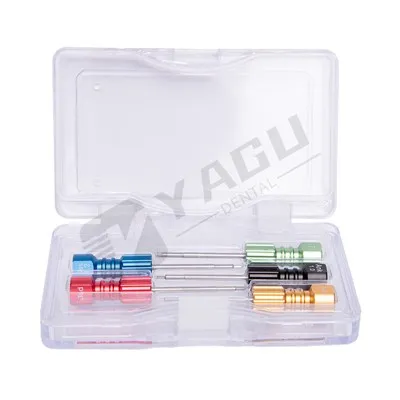
Hey there! As a supplier of Angled Abutment Straumann, I'm super excited to walk you through the installation process of these amazing dental components. In this blog, I'll break down the steps in a simple and easy - to - understand way. So, whether you're a dentist looking to learn more or someone just curious about dental implants, you're in the right place.
First things first, let's talk a bit about what Angled Abutment Straumann is. It's a crucial part of dental implant systems that helps in achieving the right angulation for the final restoration. This is especially useful when the natural tooth position or the anatomy of the patient's jaw requires a non - straight alignment. There are different types available, like the Angled Abutment Dental Implant and the Multi Angled Abutment, each designed to fit specific clinical needs.
Pre - installation Preparations
Before we start with the actual installation, a bunch of preparatory steps are necessary. The first step is a thorough patient evaluation. This includes taking detailed X - rays, like panoramic X - rays and cone - beam computed tomography (CBCT). These imaging techniques help us get a clear picture of the patient's jawbone structure, the position of nerves, and any existing teeth in the area. We also need to assess the patient's overall oral health, including checking for any signs of gum disease or infections.
Next, we select the appropriate Angled Abutment Straumann for the patient. This decision is based on several factors. The angulation needed is determined by the position of the adjacent teeth and the desired final restoration. For example, if the adjacent teeth are tilted, we'll need an abutment with a specific angle to match the overall alignment. The size of the abutment also matters. It should fit perfectly with the dental implant that's already placed in the jawbone. You can find a variety of sizes and angulations in our Angled Abutment Dental Implant collection.
The Installation Process
Once all the preparations are done, it's time to start the installation. The first step is to access the dental implant. This usually involves making a small incision in the gum tissue to expose the implant. The dentist has to be really careful during this step to avoid damaging the surrounding tissues. Local anesthesia is used to make sure the patient doesn't feel any pain.
After the implant is exposed, we clean the implant surface thoroughly. Any debris or bacteria on the implant can cause problems later, so this cleaning step is super important. We use special tools to gently remove any plaque or calculus that might have built up.
Now, it's time to attach the Angled Abutment Straumann to the implant. We carefully place the abutment on the implant and use a torque wrench to tighten it to the recommended level. The torque is crucial because if it's too loose, the abutment might come off, and if it's too tight, it could damage the implant or the abutment itself. Different models of Angled Abutment Straumann have different torque requirements, so we always follow the manufacturer's guidelines.
Once the abutment is securely attached, we check the fit and the angulation. The dentist will use a bite registration or other measuring tools to make sure that the abutment is in the right position and at the correct angle. This step is essential for the success of the final restoration. If the angulation is off, the final crown or bridge might not fit properly, which can lead to problems with chewing and aesthetics.
Post - installation Care
After the Angled Abutment Straumann is installed, proper post - installation care is vital. The patient will be given instructions on how to take care of the area. This includes keeping the area clean by gently brushing and rinsing with an antibacterial mouthwash. The patient should avoid eating hard or sticky foods for a few days to allow the gum tissue to heal properly.
The dentist will also schedule follow - up appointments. During these appointments, the dentist will check the healing progress, make sure the abutment is still in place, and look for any signs of complications. If everything goes well, the next step is to place the final restoration, like a crown or a bridge. For those looking for straight - type options, we also offer Straight Abutment which can be used in different clinical scenarios.
Advantages of Angled Abutment Straumann
There are several reasons why Angled Abutment Straumann is so popular in the dental industry. Firstly, it allows for more flexible treatment options. In cases where the natural tooth position is not ideal or the jawbone anatomy is complex, angled abutments can help achieve a better - fitting and more aesthetically pleasing final restoration.
Secondly, it improves the overall function of the dental implant. By providing the correct angulation, the abutment helps distribute the chewing forces evenly across the implant and the surrounding tissues. This reduces the risk of implant failure and prolongs the lifespan of the restoration.
Another advantage is the ease of use. The design of Angled Abutment Straumann is user - friendly, making it easier for dentists to install and for patients to adapt to. It also offers a wide range of customization options, so it can be tailored to each patient's specific needs.


Conclusion
In conclusion, the installation process of Angled Abutment Straumann is a well - structured procedure that involves careful planning, precise execution, and proper post - installation care. As a supplier, we're committed to providing high - quality products that meet the diverse needs of the dental community. Whether you're looking for Angled Abutment Dental Implant, Multi Angled Abutment, or Straight Abutment, we've got you covered.
If you're interested in purchasing Angled Abutment Straumann or have any questions about the installation process, don't hesitate to reach out to us. We're here to help you make the right choices for your patients. Contact us to start a procurement discussion and let's work together to provide the best dental solutions.
References
- Misch, C. E. (2018). Dental Implant Prosthetics. Quintessence Publishing Co, Inc.
- Tarnow, D. P., & Cho, S. - H. (2019). The Dental Implant Patient: A Guide to Implant Dentistry. Wiley Blackwell.