What is the History of Implant Screw Drivers?
Implant screw drivers, essential tools in the field of dental implantology, have a rich and evolving history that parallels the development of dental implant technology itself. As a leading supplier of Implant Screw Drivers, we take great pride in understanding the journey of these crucial instruments.
Early Beginnings
The concept of dental implants dates back thousands of years. Ancient civilizations such as the Mayans, Egyptians, and Etruscans attempted to replace missing teeth with various materials, including shells, stones, and even human or animal teeth. However, these early attempts were far from what we consider modern dental implants today.
It wasn't until the 19th century that more scientific approaches to dental implants began to emerge. In 1809, a dentist named Dr. John Greenwood created a set of dentures for George Washington using hippopotamus ivory and human teeth. This was one of the early examples of dental prosthetics, but it still didn't involve the use of implant screw drivers as we know them.
The real breakthrough in dental implant technology came in the 1950s when a Swedish orthopedic surgeon named Per-Ingvar Brånemark discovered osseointegration. He was conducting research on blood flow in bone tissue using titanium chambers, and he noticed that the titanium became firmly integrated with the bone. This discovery laid the foundation for modern dental implants.
The Emergence of Implant Screw Drivers
As dental implant technology advanced, the need for specialized tools to place and secure the implants became apparent. The first implant screw drivers were relatively simple in design. They were typically made of stainless steel and had a basic handle and a tip that fit into the screw on the dental implant.
In the early days, these tools were often custom-made by dental technicians or machinists. The design and functionality of the implant screw drivers were closely tied to the specific implant systems being used. Different implant manufacturers developed their own unique screw designs, which required corresponding screw drivers.
During the 1970s and 1980s, the dental implant industry began to grow rapidly. More implant systems were introduced to the market, and the demand for high-quality implant screw drivers increased. Manufacturers started to focus on improving the design and performance of these tools. They began to use more advanced materials, such as titanium and high-grade stainless steel, to make the screw drivers more durable and corrosion-resistant.
Technological Advancements
In the 1990s, significant technological advancements were made in the field of dental implantology. Computer-aided design (CAD) and computer-aided manufacturing (CAM) technologies were introduced, which allowed for more precise and customized implant screw driver designs. These technologies enabled manufacturers to create screw drivers with complex geometries that could better fit the specific screw designs of different implant systems.
Another important development was the introduction of torque control in implant screw drivers. Torque is the rotational force applied to the screw when tightening it. Proper torque is crucial for ensuring the stability and longevity of the dental implant. If the torque is too low, the screw may not be tightened enough, leading to implant failure. If the torque is too high, it can damage the bone or the implant itself.
Torque control mechanisms in implant screw drivers help to ensure that the correct amount of torque is applied during the implant placement process. These mechanisms can be either mechanical or electronic. Mechanical torque control devices use a spring-loaded mechanism to limit the amount of torque applied, while electronic torque control devices use sensors and microprocessors to precisely measure and control the torque.
Modern Implant Screw Drivers
Today, implant screw drivers are highly sophisticated tools that incorporate the latest technological advancements. They are designed to be ergonomic, easy to use, and precise. Many modern implant screw drivers are cordless and rechargeable, which provides greater flexibility and convenience during the implant placement procedure.
In addition to traditional screw drivers, there are also specialized implant screw drivers for specific applications. For example, there are screw drivers for placing abutments, which are the components that connect the dental implant to the crown or denture. There are also screw drivers for removing and replacing screws in case of implant maintenance or repair.
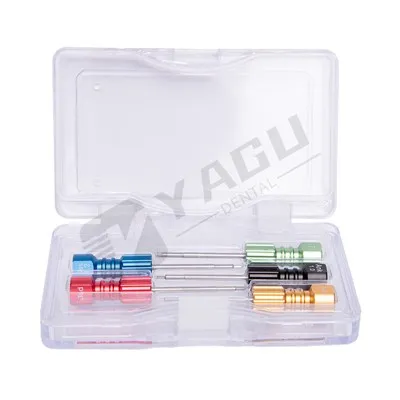
As a supplier of Implant Screw Drivers, we offer a wide range of high-quality products to meet the needs of dental professionals. Our screw drivers are designed and manufactured to the highest standards, using the latest materials and technologies. We also provide comprehensive training and support to ensure that our customers can use our products effectively.
Related Dental Implant Tools
In addition to implant screw drivers, there are other important tools in the field of dental implantology. One such tool is the Bone Chip Maker. Bone chips are often used in dental implant procedures to promote bone growth and integration around the implant. The bone chip maker is a specialized tool that is used to create small bone chips from the patient's own bone or from donor bone.
Another important tool is the Dental Implant Screwdriver. This tool is specifically designed for placing and removing the screws that secure the dental implant in place. It is available in different sizes and designs to fit the specific screw requirements of different implant systems.


Conclusion
The history of implant screw drivers is a testament to the continuous evolution of dental implant technology. From the early days of simple stainless steel tools to the highly sophisticated and technologically advanced screw drivers of today, these instruments have played a crucial role in the success of dental implant procedures.
As a leading supplier of implant screw drivers and other dental implant tools, we are committed to staying at the forefront of technological advancements in the industry. We strive to provide our customers with the highest quality products and the best possible service. If you are a dental professional looking for reliable and high-performance implant screw drivers, we invite you to contact us to discuss your specific needs and explore our product range. We look forward to the opportunity to work with you and contribute to the success of your dental implant procedures.
References
- Brånemark, P. I., Zarb, G. A., & Albrektsson, T. (1985). Tissue-integrated prostheses: Osseointegration in clinical dentistry. Quintessence Publishing Co.
- Misch, C. E. (2010). Contemporary implant dentistry. Mosby.
- Schröder, U. (2007). History of dental implants. In L. F. Chiche & J. M. Roulet (Eds.), Dental implants: Fundamentals and clinical practice (pp. 9-20). Quintessence Publishing Co.