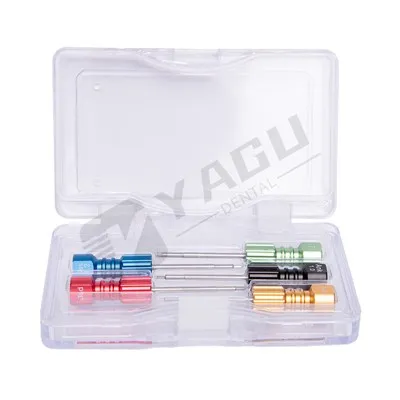
Hey there! As a supplier of pre-milled abutments, I've been getting a lot of questions lately about the difference between pre-milled abutments for single-piece and two-piece implants. So, I thought I'd take the time to break it down for you all in this blog post.
First off, let's talk about what pre-milled abutments are. These are pre-fabricated components that are designed to connect the implant fixture in the jawbone to the dental restoration, like a crown or a bridge. They come in a variety of shapes, sizes, and materials, and they're milled to precise specifications to ensure a proper fit.
Single-Piece Implants
Single-piece implants are exactly what they sound like - a one-piece design where the implant body and the abutment are all in one unit. This type of implant is inserted directly into the jawbone, and once it osseointegrates (fuses with the bone), the dental restoration can be attached right to it.
One of the biggest advantages of single-piece implants is their simplicity. Since there's only one piece, there are fewer components to worry about, which can potentially reduce the risk of complications. The installation process is also generally quicker and less invasive, which is great news for patients who are looking for a more straightforward treatment.
When it comes to pre-milled abutments for single-piece implants, they're often designed to be a perfect match for the specific implant system. This means that they can be easily attached to the implant without the need for a lot of custom adjustments. The pre-milled abutments for single-piece implants typically have a smooth and continuous surface, which can help promote better soft tissue healing around the implant.
However, single-piece implants do have some limitations. Because the implant and abutment are fixed together, it can be more challenging to make adjustments if there are any issues with the alignment or the fit of the restoration. Also, if there's a problem with the abutment, the entire implant may need to be replaced, which can be a more complex and costly procedure.
Two-Piece Implants
Two-piece implants, on the other hand, consist of two separate components: the implant body that's placed in the jawbone and the abutment that's attached to the implant later. After the implant body has osseointegrated, a second surgical procedure is usually required to connect the abutment to the implant.
The main advantage of two-piece implants is the flexibility they offer. Since the abutment can be selected and customized after the implant has healed, it allows for more precise adjustment of the restoration's position and angulation. This can result in a better aesthetic outcome and a more comfortable fit for the patient.
Pre-milled abutments for two-piece implants are designed to be compatible with a wide range of implant systems. They come in different heights, diameters, and angulations to accommodate various clinical situations. The connection between the abutment and the implant is typically a screw or a press-fit mechanism, which provides a stable and secure attachment.
One of the drawbacks of two-piece implants is the additional surgical step. The second procedure can add to the overall treatment time and may cause more discomfort for the patient. There's also a slightly higher risk of infection or other complications associated with the second surgery.
Key Differences in Pre-Milled Abutments
Now, let's take a closer look at the key differences between pre-milled abutments for single-piece and two-piece implants.
Design and Fit
Pre-milled abutments for single-piece implants are usually designed to be a direct extension of the implant body. They have a more integrated look and feel, and they're often optimized for the specific implant system. In contrast, pre-milled abutments for two-piece implants are more modular, with a wider range of options available to customize the fit and alignment of the restoration.
Attachment Mechanism
As mentioned earlier, single-piece implants often have a simpler attachment mechanism since the abutment is already part of the implant. Two-piece implants, on the other hand, require a separate connection between the abutment and the implant, which can be either a screw or a press-fit. The choice of attachment mechanism can affect the stability and the ease of installation of the pre-milled abutment.
Customization
Two-piece implants offer more opportunities for customization. The pre-milled abutments can be selected based on the patient's specific needs, such as the desired height, angulation, and diameter. This allows for a more personalized treatment plan and a better aesthetic result. Single-piece implants, while they can still be customized to some extent, have more limitations in terms of the adjustments that can be made.
Soft Tissue Management
Pre-milled abutments for single-piece implants are designed to promote soft tissue integration from the start. Their smooth and continuous surface can help create a more natural-looking gum line. Two-piece implants, with their separate abutment, allow for more precise soft tissue management during the second surgical procedure. The abutment can be shaped and positioned to optimize the soft tissue contour around the implant.
Choosing the Right Pre-Milled Abutment
When it comes to choosing the right pre-milled abutment for either single-piece or two-piece implants, there are several factors to consider.
- Implant System Compatibility: Make sure the pre-milled abutment is compatible with the specific implant system you're using. Different implant manufacturers have different designs and specifications, so it's crucial to choose an abutment that fits properly.
- Patient's Anatomy: The patient's jawbone structure, the position of the adjacent teeth, and the desired aesthetic outcome all play a role in selecting the right abutment. For example, if the patient has limited space or a specific angulation requirement, a pre-milled abutment with the appropriate features will be needed.
- Clinical Situation: Consider the complexity of the case and the treatment goals. If a quick and simple solution is needed, a pre-milled abutment for a single-piece implant may be a good choice. However, if more customization and precision are required, a two-piece implant with a pre-milled abutment may be more suitable.
Related Products
If you're in the process of working with implants, you might also be interested in some related products. For example, the Osstem Transfer Impression Coping is a useful tool for accurately transferring the position of the implant to the dental model. The Osstem Lab Analog can be used in the laboratory to replicate the implant in the dental model, which is essential for fabricating the restoration. And if you need a temporary solution during the treatment process, the Temporary Abutment can provide a functional and aesthetic option.


Contact for Purchase
If you're interested in purchasing pre-milled abutments for single-piece or two-piece implants, or if you have any questions about our products, I'd love to hear from you. We offer a wide range of high-quality pre-milled abutments that are compatible with various implant systems. Whether you're a dentist, a dental technician, or a clinic manager, we can provide you with the products and support you need. Just reach out, and we can start a conversation about your specific requirements.
References
- Misch, C. E. (2018). Contemporary Implant Dentistry. Quintessence Publishing Co., Inc.
- Tarnow, D. P., & Cho, S. H. (2017). The Biology of Implant Dentistry. Wiley Blackwell.
- Brånemark, P. I., Zarb, G. A., & Albrektsson, T. (2017). Tissue-Integrated Prostheses: Osseointegration in Clinical Dentistry. Quintessence Publishing Co., Inc.