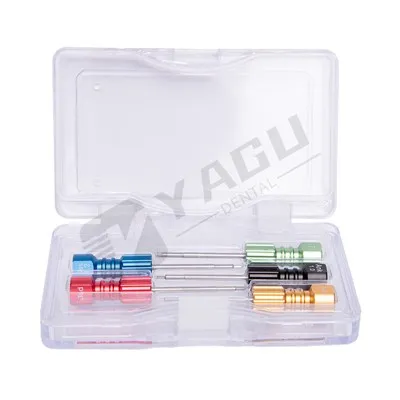
Hey there! As a supplier of Osstem Temporary Abutment, I get a lot of questions about the product. One of the most common ones is about its creep resistance. So, let's dive right into it and figure out what the creep resistance of Osstem Temporary Abutment is all about.
First off, what's creep? In simple terms, creep is the slow and progressive deformation of a material under a constant load over time. This is a crucial factor to consider when it comes to dental implants and abutments because they're constantly under stress from chewing and other oral functions. If an abutment has poor creep resistance, it could start to deform over time, which might lead to problems like loose fittings, misalignments, and even implant failure.
Now, let's talk specifically about Osstem Temporary Abutment. Osstem is a well - known brand in the dental industry, and their temporary abutments are designed with high - quality materials and advanced manufacturing techniques to ensure good creep resistance.
The materials used in Osstem Temporary Abutments play a huge role in their creep resistance. These abutments are often made from titanium or titanium alloys. Titanium is a great choice for dental applications because it has excellent biocompatibility, meaning it's well - tolerated by the human body. But it also has good mechanical properties, including relatively low creep rates. Titanium alloys can be even better, as they can be engineered to have enhanced strength and creep resistance.
The manufacturing process of Osstem Temporary Abutments is also optimized to improve creep resistance. Precise machining and heat - treatment processes are used to ensure the internal structure of the abutment is uniform and stable. A well - structured material is less likely to deform under stress, which directly translates to better creep resistance.
Let's compare Osstem Temporary Abutment with some other products in the market. For example, the Ti Base Abutment and Nobel Ti Base. While these are also high - quality products, Osstem Temporary Abutment has its own unique features. Osstem has spent a lot of time researching and developing their products to meet the specific needs of dental professionals and patients. Their focus on creep resistance is part of this commitment to quality.
In clinical settings, the good creep resistance of Osstem Temporary Abutment has several benefits. For patients, it means a more stable and long - lasting dental restoration. Since the abutment is less likely to deform, the crown or prosthesis attached to it will fit properly over time. This reduces the risk of discomfort, food getting trapped around the implant, and secondary infections.
For dental professionals, a temporary abutment with good creep resistance is much easier to work with. They can be more confident in the long - term stability of the restoration they're placing. It also means fewer follow - up adjustments and replacements, which saves time and resources for both the dentist and the patient.
Another aspect to consider is the role of proper maintenance in maintaining the creep resistance of Osstem Temporary Abutment. Patients should follow good oral hygiene practices, such as regular brushing, flossing, and using mouthwash. This helps to prevent the build - up of plaque and bacteria around the abutment, which could potentially affect its mechanical properties over time.
Now, let's touch on how the creep resistance of Osstem Temporary Abutment compares to other materials used in dental abutments. Some abutments might be made from ceramics or polymers. Ceramics can be very aesthetically pleasing, but they can be more brittle and may have different creep characteristics compared to titanium. Polymers, on the other hand, might have higher creep rates in some cases, especially under high - stress conditions.
The design of Osstem Temporary Abutment also contributes to its creep resistance. The shape and dimensions are carefully engineered to distribute the load evenly across the abutment. This reduces the concentration of stress in any one area, which helps to prevent premature deformation.
In research studies, the creep resistance of Osstem Temporary Abutment has been evaluated under various conditions. These studies use advanced testing equipment to simulate the real - world forces that the abutment will experience in the mouth. The results consistently show that Osstem Temporary Abutment performs well in terms of creep resistance, meeting or exceeding industry standards.
If you're in the dental industry, whether you're a dentist, a dental technician, or a distributor, you know how important it is to have reliable products. Osstem Temporary Abutment, with its good creep resistance, is a product that you can trust. It offers a combination of quality, performance, and long - term stability.
We also offer related products like the Dentium Peek Scanbody, which can work in conjunction with Osstem Temporary Abutment to provide a comprehensive dental solution.
If you're interested in learning more about Osstem Temporary Abutment or have any questions about its creep resistance or other features, don't hesitate to reach out. We're here to help you make the best choices for your dental practice or patient needs. Whether you're looking to purchase in small quantities for a single clinic or in bulk for a large - scale distribution, we can work with you to find the right solution.
In conclusion, the creep resistance of Osstem Temporary Abutment is an important feature that sets it apart in the dental market. Thanks to the use of high - quality materials, advanced manufacturing processes, and smart design, it offers excellent long - term stability. If you're in the market for dental abutments, I highly recommend considering Osstem Temporary Abutment.
References


- Dental Materials Science textbooks
- Research papers on dental implant abutment materials and properties
- Osstem product manuals and technical specifications