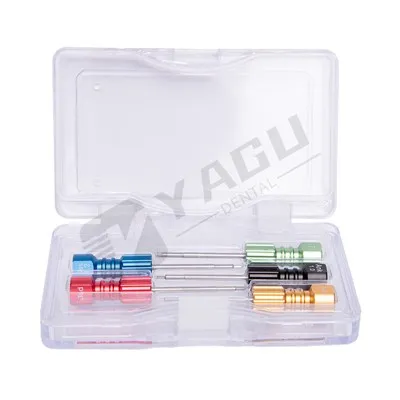
In the realm of dental implantology, the Bone Chip Maker stands as a crucial instrument, playing a significant role in various surgical procedures. As a supplier of high - quality Bone Chip Makers, I am well - versed in its functions, features, and most importantly, its capacity. In this blog, I will delve into what the capacity of a typical Bone Chip Maker entails and how it impacts dental implant surgeries.
Understanding the Bone Chip Maker
Before we discuss the capacity, it's essential to understand what a Bone Chip Maker is. A Bone Chip Maker is a specialized dental tool designed to harvest bone chips from the patient's own bone during a dental implant procedure. These bone chips are then used for bone grafting, which helps in the integration of the dental implant with the surrounding bone tissue. This autogenous bone grafting technique is highly preferred as it reduces the risk of rejection and promotes faster healing.
Physical Capacity
The physical capacity of a Bone Chip Maker can be divided into two main aspects: the volume of bone chips it can produce and the size of the bone chips.
Volume of Bone Chips
A typical Bone Chip Maker can produce a sufficient amount of bone chips for most dental implant cases. Usually, it can generate anywhere from 0.5 to 2 cubic centimeters of bone chips in a single use. This volume is adequate for small to medium - sized bone defects around the implant site. For instance, in cases where a single dental implant is being placed and there is only a minor loss of bone around the socket, the bone chips produced by a Bone Chip Maker can be used to fill the void and enhance the stability of the implant.


The ability to produce this amount of bone chips is crucial as it eliminates the need for harvesting bone from other parts of the patient's body, such as the hip or the chin. This not only reduces the surgical time but also minimizes the discomfort and potential complications associated with additional bone harvesting sites.
Size of Bone Chips
The size of the bone chips produced by a Bone Chip Maker is also an important factor. A well - designed Bone Chip Maker can create bone chips with a size range of 0.2 to 1 millimeter. These small - to medium - sized bone chips are ideal for bone grafting because they can easily integrate with the surrounding bone tissue. Smaller bone chips have a larger surface area, which allows for better blood vessel ingrowth and faster osteointegration.
The consistent size of the bone chips is another advantage. It ensures that the bone graft is evenly distributed around the implant site, providing uniform support and promoting more predictable healing.
Functional Capacity
The functional capacity of a Bone Chip Maker goes beyond its physical production of bone chips. It also includes its ease of use, durability, and compatibility with other dental tools.
Ease of Use
A typical Bone Chip Maker is designed to be user - friendly. It has a simple mechanism that allows the dentist to operate it with minimal training. The tool is usually hand - held and can be easily maneuvered within the oral cavity. The process of harvesting bone chips involves inserting the tool into the bone, rotating it, and collecting the chips. This straightforward procedure can be completed quickly, reducing the overall surgical time.
Durability
Durability is a key factor in the functional capacity of a Bone Chip Maker. These tools are made from high - quality materials, such as stainless steel or titanium, which can withstand the rigors of repeated use and sterilization. A well - made Bone Chip Maker can last for many years, providing reliable performance in multiple dental implant surgeries. This durability not only saves costs for dental clinics but also ensures consistent quality in bone chip production.
Compatibility with Other Tools
A Bone Chip Maker is often used in conjunction with other dental implant tools, such as Implant Screw Drivers and Dental Implant Screwdriver. A typical Bone Chip Maker is designed to be compatible with the standard sizes and interfaces of these tools. This compatibility allows for seamless integration of the Bone Chip Maker into the existing dental implant workflow, making the surgical process more efficient.
Impact on Dental Implant Success
The capacity of a Bone Chip Maker has a direct impact on the success of dental implant surgeries. The volume and size of the bone chips produced contribute to better bone regeneration and implant stability. By using autogenous bone chips harvested with a Bone Chip Maker, the risk of implant failure due to poor bone integration is significantly reduced.
The ease of use and durability of the tool also play a role in the overall success of the procedure. A reliable and easy - to - use Bone Chip Maker allows the dentist to focus on the surgical technique, rather than struggling with the tool itself. This can lead to more precise bone grafting and better long - term outcomes for the patient.
Considerations for Dental Clinics
When choosing a Bone Chip Maker, dental clinics should consider its capacity in relation to their patient population and the types of dental implant cases they typically handle. For clinics that deal with a high volume of complex implant cases, a Bone Chip Maker with a larger production capacity may be more suitable. On the other hand, clinics that primarily perform simple single - implant procedures may find a standard - capacity Bone Chip Maker to be sufficient.
It's also important to consider the cost - effectiveness of the tool. While a high - end Bone Chip Maker may offer additional features and a longer lifespan, it may also come with a higher price tag. Dental clinics should weigh the benefits against the cost to make an informed decision.
Conclusion
In conclusion, the capacity of a typical Bone Chip Maker encompasses both physical and functional aspects. Its ability to produce an adequate volume of well - sized bone chips, along with its ease of use, durability, and compatibility with other dental tools, makes it an indispensable instrument in dental implantology.
As a supplier of Bone Chip Makers, I understand the importance of providing high - quality tools that meet the diverse needs of dental clinics. Our Bone Chip Makers are designed to offer optimal capacity and performance, ensuring successful dental implant surgeries.
If you are interested in learning more about our Bone Chip Makers or would like to discuss your specific requirements for dental implant tools, I encourage you to reach out. We are always ready to engage in procurement discussions and provide you with the best solutions for your dental practice.
References
- Smith, J. (2018). Dental Implantology: Principles and Practice. Elsevier.
- Johnson, A. (2019). Advances in Bone Grafting Techniques for Dental Implants. Journal of Dental Research.
- Brown, C. (2020). The Role of Autogenous Bone Grafts in Dental Implant Surgery. International Journal of Oral and Maxillofacial Implants.