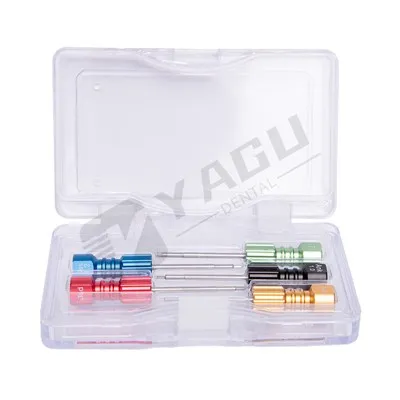
As a supplier of straight abutments, I've witnessed firsthand the intricate dance of factors that influence the price of these essential dental components. Straight abutments play a crucial role in dental implant procedures, serving as the connection between the implant fixture and the dental restoration. Understanding what drives their pricing can help dental professionals make informed decisions when selecting the right products for their patients. In this blog, I'll delve into the key factors that affect the price of a straight abutment.
Material Quality
One of the most significant factors influencing the price of a straight abutment is the quality of the material used in its manufacture. High - quality materials not only ensure the durability and biocompatibility of the abutment but also contribute to better patient outcomes.
Titanium is a commonly used material for straight abutments due to its excellent biocompatibility, corrosion resistance, and strength. Grade 5 titanium, also known as Ti - 6Al - 4V, is a premium alloy that contains aluminum and vanadium, enhancing its mechanical properties. Abutments made from Grade 5 titanium are generally more expensive than those made from lower - grade titanium alloys because of the higher cost of the raw material and the more complex manufacturing processes required to work with it.
Zirconia is another popular material choice for straight abutments. It offers excellent aesthetics, as it closely mimics the color of natural teeth, and has high strength and biocompatibility. Zirconia abutments are often more expensive than titanium ones. The production of zirconia involves high - temperature sintering processes and precision machining, which add to the overall cost. Additionally, the raw material for high - quality zirconia is relatively costly, contributing to the higher price tag.
Manufacturing Process
The manufacturing process of a straight abutment can have a substantial impact on its price. Precision manufacturing techniques are required to ensure that the abutment fits accurately with the implant fixture and the dental restoration.
CNC (Computer Numerical Control) machining is a widely used method for producing straight abutments. This process uses computer - controlled machines to cut and shape the raw material with high precision. CNC machining allows for the creation of complex geometries and tight tolerances, which are essential for a proper fit. However, it is a relatively expensive manufacturing process due to the high cost of the machinery, the skilled labor required to operate it, and the time - consuming nature of the machining operations.
Investment casting is another manufacturing method used for some straight abutments. In this process, a wax pattern of the abutment is created, surrounded by a ceramic shell, and then melted out. Molten metal is then poured into the cavity left by the wax, forming the abutment. Investment casting can produce abutments with good accuracy and surface finish. However, it also involves multiple steps, including pattern making, shell building, and casting, which can increase the cost.


Custom - made straight abutments are even more expensive than standard ones. They are designed specifically for a patient's unique anatomical requirements, often based on detailed impressions and 3D imaging. The design and manufacturing of custom abutments require additional time and resources, such as the expertise of dental technicians and the use of advanced software for design and planning.
Brand and Reputation
The brand and reputation of the manufacturer can also affect the price of a straight abutment. Well - established brands with a long history of producing high - quality dental products often charge a premium for their straight abutments.
These brands have invested heavily in research and development to ensure the safety, efficacy, and performance of their products. They also adhere to strict quality control standards and have a reputation for providing excellent customer service. Dental professionals may be willing to pay more for a straight abutment from a trusted brand because they have confidence in the product's quality and reliability.
On the other hand, lesser - known brands or generic straight abutments may be available at a lower price. However, they may not have the same level of quality assurance or the backing of extensive research and development. Dental professionals need to carefully evaluate the pros and cons of choosing a well - known brand versus a more affordable alternative based on their patients' needs and their own clinical experience.
Design and Features
The design and features of a straight abutment can contribute to its price. Some straight abutments come with additional features that enhance their functionality or ease of use.
For example, some abutments have a pre - angled design, which can simplify the placement of the dental restoration and improve the overall aesthetics of the final result. These Angled Abutment Dental Implant are often more expensive than standard straight abutments because of the additional design and manufacturing complexity.
Multi - unit abutments, such as the Straumann Multi Unit Abutment, are designed to connect multiple implant fixtures. They are used in cases where multiple teeth need to be replaced with a single restoration. Multi - unit abutments are more complex in design and require more precise manufacturing, which makes them more expensive than single - unit straight abutments.
Some straight abutments also feature surface treatments or coatings that can improve their performance. For example, a titanium abutment may have a treated surface to enhance osseointegration (the process by which the implant fuses with the bone). These surface - treated abutments are usually more expensive than non - treated ones due to the additional processing steps involved.
Market Demand and Supply
The basic economic principles of supply and demand also play a role in determining the price of straight abutments. If the demand for straight abutments is high and the supply is limited, the price is likely to increase.
Factors that can affect demand include the growing popularity of dental implant procedures, which has led to an increased need for high - quality straight abutments. As more patients opt for dental implants as a solution for missing teeth, the demand for compatible abutments has risen.
On the supply side, factors such as raw material shortages, production capacity limitations, and disruptions in the supply chain can reduce the availability of straight abutments. For example, if there is a shortage of high - quality zirconia raw material, the production of zirconia straight abutments may be affected, leading to an increase in price.
Regulatory and Certification Requirements
Dental products, including straight abutments, are subject to strict regulatory requirements in many countries. Manufacturers must obtain various certifications to ensure that their products meet safety and quality standards.
Obtaining regulatory approvals, such as CE (Conformité Européene) marking in Europe or FDA (Food and Drug Administration) clearance in the United States, involves extensive testing, documentation, and compliance with specific regulations. These processes can be time - consuming and expensive for manufacturers. The cost of regulatory compliance is often passed on to the customer in the form of higher product prices.
In addition, some countries may have more stringent regulatory requirements than others. Abutments that are designed to meet the highest international standards may be more expensive than those that are only compliant with local regulations.
Packaging and Accessories
The packaging and any accompanying accessories can also contribute to the price of a straight abutment. High - quality packaging is designed to protect the abutment during storage and transportation and to maintain its sterility. Specialized packaging materials and designs can add to the cost.
Some straight abutments come with additional accessories, such as torque wrenches, healing caps, or impression copings. These accessories are necessary for the proper installation and use of the abutment. The cost of including these accessories in the product package is factored into the overall price.
Conclusion
In conclusion, the price of a straight abutment is influenced by a variety of factors, including the material quality, manufacturing process, brand and reputation, design and features, market demand and supply, regulatory and certification requirements, and packaging and accessories. As a supplier, I understand the importance of providing high - quality straight abutments at a competitive price.
When dental professionals are considering purchasing straight abutments, they should carefully evaluate these factors to determine the best product for their patients. It's not always about choosing the cheapest option, but rather finding the right balance between quality, performance, and cost.
If you're a dental professional interested in learning more about our range of straight abutments or would like to discuss purchasing options, we'd be more than happy to assist you. We can provide detailed information about our products, including the materials used, the manufacturing processes, and the pricing. Contact us to start a conversation about how our straight abutments can meet your clinical needs and your patients' expectations.
References
- Brånemark, P. I., Zarb, G. A., & Albrektsson, T. (1985). Tissue - integrated prostheses: osseointegration in clinical dentistry. Quintessence Publishing Co.
- Misch, C. E. (2010). Dental implant prosthetics. Mosby.
- Misch, C. E. (2008). Contemporary implant dentistry. Mosby.