Dental implant procedures have revolutionized the field of dentistry, offering patients a long - lasting and aesthetically pleasing solution for missing teeth. Among the numerous tools and components involved in dental implant surgeries, implant - level healing caps play a crucial role. As a dental implant tools supplier, I've witnessed firsthand the importance of these small yet significant devices. In this blog, I'll delve into the functions of dental implant implant - level healing caps and their impact on the overall success of dental implant treatments.
1. Protection of the Implant Interface
One of the primary functions of implant - level healing caps is to protect the implant - abutment interface. After the dental implant is placed into the jawbone, it needs a period of osseointegration, during which the bone fuses with the implant surface. During this critical phase, the implant - abutment interface is vulnerable to contamination from oral bacteria, food debris, and other foreign substances.
The healing cap acts as a physical barrier, sealing off the implant. It prevents bacteria from entering the internal components of the implant, which could lead to infections such as peri - implantitis. Peri - implantitis is a serious condition that can cause bone loss around the implant and ultimately lead to implant failure. By protecting the implant - abutment interface, the healing cap helps to create a clean and stable environment for osseointegration to occur.
2. Soft Tissue Management
Another vital function of implant - level healing caps is soft tissue management. The healing cap helps to shape and contour the surrounding soft tissues, such as the gingiva (gums). When the implant is first placed, the gingival tissues need to heal and adapt to the presence of the implant.
The shape and size of the healing cap can be carefully selected to guide the growth and development of the gingival tissues. A well - designed healing cap can encourage the formation of a healthy gingival cuff around the implant. This gingival cuff provides a natural - looking and functional seal around the implant, which is not only aesthetically pleasing but also helps to prevent bacteria from penetrating into the underlying bone.
Moreover, the healing cap can stimulate the growth of new blood vessels in the surrounding soft tissues. Adequate blood supply is essential for tissue healing and regeneration. By promoting angiogenesis (the formation of new blood vessels), the healing cap supports the overall health of the soft tissues around the implant.
3. Facilitation of Abutment Placement
Implant - level healing caps also play a role in facilitating the subsequent placement of the abutment. After the osseointegration period is complete, the healing cap needs to be removed, and an abutment is placed on top of the implant. The healing cap serves as a temporary placeholder that helps to maintain the correct position and orientation of the implant in the oral cavity.
During the healing phase, the healing cap ensures that the implant remains stable and does not shift or move. This stability is crucial for the accurate placement of the abutment. When the time comes to place the abutment, the dentist can easily remove the healing cap and use the implant's internal connection to attach the abutment precisely. A well - fitting abutment is essential for the long - term success of the dental implant restoration, as it provides a stable foundation for the final dental prosthesis, such as a crown or a bridge.
4. Aesthetic Considerations
Although the primary functions of implant - level healing caps are related to protection and tissue management, they also have aesthetic implications. The appearance of the healing cap can influence the final aesthetic outcome of the dental implant restoration.


Some healing caps are designed to mimic the natural shape and color of the teeth and gums. This can help to create a more seamless transition between the implant and the surrounding natural teeth. Additionally, the healing cap can be used to test the esthetic appearance of the future restoration. By using a temporary healing cap, the dentist and the patient can visualize how the final restoration will look in the mouth and make any necessary adjustments before the permanent abutment and prosthesis are placed.
5. Patient Comfort
Implant - level healing caps contribute to patient comfort during the healing process. After the implant surgery, patients may experience some discomfort and sensitivity in the area where the implant was placed. The healing cap provides a smooth and rounded surface that is less likely to irritate the surrounding soft tissues.
Compared to leaving the implant exposed, the presence of a healing cap can reduce the risk of food impaction and irritation of the surgical site. This can help to minimize pain and discomfort for the patient, allowing them to resume their normal diet and oral hygiene routine more quickly.
Complementary Dental Implant Tools
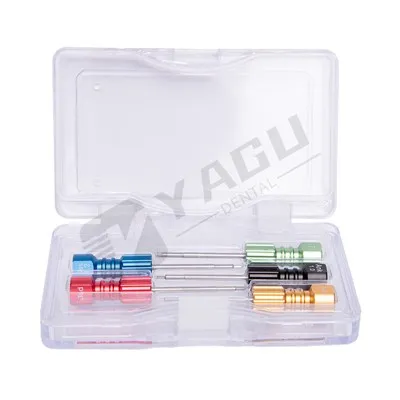
As a dental implant tools supplier, I understand that implant - level healing caps are just one part of a comprehensive set of tools used in dental implant procedures. Other important tools include Dental Implant Screwdriver and Implant Screw Drivers. These tools are used for the precise placement and tightening of screws during the implant and abutment installation process.
Another useful tool is the Bone Chip Maker. The bone chip maker can be used to harvest autogenous bone chips during the implant surgery. These bone chips can be used to augment the bone around the implant, which can improve the stability and long - term success of the implant.
Conclusion
In conclusion, implant - level healing caps are essential components in dental implant procedures. Their functions range from protecting the implant - abutment interface and managing soft tissues to facilitating abutment placement, considering aesthetics, and enhancing patient comfort. As a dental implant tools supplier, I am committed to providing high - quality implant - level healing caps and other dental implant tools to support the success of dental implant treatments.
If you are a dental professional interested in purchasing high - quality dental implant tools, including implant - level healing caps, Dental Implant Screwdriver, Implant Screw Drivers, and Bone Chip Maker, please feel free to contact us for more information and to discuss your specific needs. We are here to provide you with the best products and services to meet your requirements.
References
- Buser D, Martin W, Belser UC. Optimizing esthetics for implant restorations with short dental implants in the anterior maxilla: a systematic review. The International Journal of Oral & Maxillofacial Implants. 2009;24 Suppl:115 - 137.
- Chen ST, Buser D. Clinical outcomes of non - submerged and submerged implant protocols: a systematic review of the literature. The International Journal of Oral & Maxillofacial Implants. 2010;25 Suppl:115 - 139.
- Tarnow DP, Magner AW, Fletcher P. The effect of the distance from the contact point to the crest of bone on the presence or absence of the interproximal dental papilla. Journal of Periodontology. 1992;63(12):995 - 996.