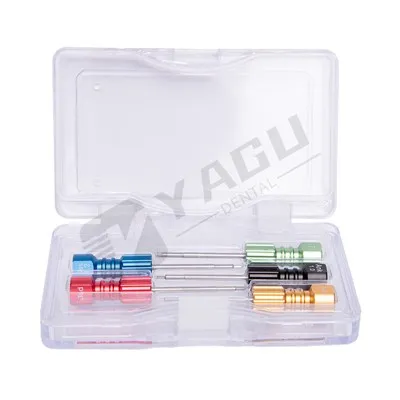
In the dynamic landscape of dental implantology, the Multi Unit Abutment has emerged as a revolutionary component, offering a plethora of economic benefits that are reshaping the industry. As a dedicated supplier of Multi Unit Abutments, I have witnessed firsthand how these innovative products are not only enhancing clinical outcomes but also driving significant cost - savings and revenue growth for dental practices and laboratories alike.


Cost - Efficiency in Production
One of the primary economic advantages of using Multi Unit Abutments lies in their cost - efficiency during the production process. Traditional single - unit abutments often require individual manufacturing steps for each component, which can be time - consuming and expensive. In contrast, Multi Unit Abutments are designed to be produced in larger batches, taking advantage of economies of scale. This means that the cost per unit is significantly reduced, as the fixed costs associated with setup, tooling, and quality control are spread over a larger number of products.
For dental laboratories, this translates into lower production costs. With the ability to produce more abutments in less time, laboratories can increase their output without a proportional increase in labor and material costs. As a result, they can offer more competitive pricing to dental practices, which in turn can lead to increased market share and higher profits. For example, a laboratory that previously produced 100 single - unit abutments per week at a high cost can now produce 300 Multi Unit Abutments with the same resources, thanks to the streamlined production process.
Reduced Chair Time for Dental Practices
In the dental practice setting, time is money. Every minute spent on a patient procedure is a valuable resource that can be used to serve more patients and generate more revenue. Multi Unit Abutments offer a significant advantage in this regard by reducing the overall chair time required for implant restorations.
These abutments are designed to simplify the implant - to - restoration connection process. They can be pre - fabricated to fit multiple implants simultaneously, eliminating the need for multiple adjustments and try - ins. This not only speeds up the treatment process but also reduces the number of patient visits. For instance, a patient who would typically require three separate appointments for a single - unit abutment restoration may only need one or two appointments with a Multi Unit Abutment.
The reduction in chair time allows dental practices to see more patients in a day, increasing their revenue potential. Moreover, it improves patient satisfaction as patients appreciate the shorter treatment duration. Satisfied patients are more likely to refer their friends and family to the practice, further boosting the practice's reputation and bottom line.
Enhanced Versatility and Compatibility
Multi Unit Abutments are highly versatile and compatible with a wide range of implant systems and restoration materials. This versatility is a significant economic benefit as it reduces the need for dental practices and laboratories to stock a large variety of single - unit abutments. Instead, they can rely on a smaller inventory of Multi Unit Abutments to meet the diverse needs of their patients.
For example, a dental practice no longer needs to purchase different abutments for different implant brands. A single type of Multi Unit Abutment can be used with multiple implant systems, which reduces inventory costs and the risk of obsolete stock. Laboratories also benefit from this versatility as they can use the same abutment design for different restoration projects, simplifying their workflow and reducing the need for specialized training on multiple abutment types.
Improved Aesthetics and Patient Acceptance
The aesthetic appeal of dental restorations is crucial for patient acceptance and satisfaction. Multi Unit Abutments are designed to provide a more natural and seamless transition between the implant and the restoration. Their ability to mimic the natural contour of the teeth and gums enhances the overall appearance of the restoration, making it more visually appealing to patients.
When patients are satisfied with the aesthetics of their dental restorations, they are more likely to accept the treatment and recommend it to others. This positive word - of - mouth can lead to an increase in patient referrals, which is a cost - effective way to acquire new patients. In addition, patients who are happy with their restorations are more likely to comply with post - treatment instructions, reducing the risk of complications and costly follow - up procedures.
Long - Term Durability and Reduced Maintenance Costs
Multi Unit Abutments are typically made from high - quality materials such as titanium and zirconia, which offer excellent durability and corrosion resistance. These materials can withstand the forces of chewing and biting over an extended period, reducing the need for frequent replacements.
For dental practices, this means lower maintenance costs. They do not have to worry about patients returning for abutment replacements or repairs, which can be time - consuming and expensive. Laboratories also benefit from the long - term durability of Multi Unit Abutments as they are less likely to receive returns or complaints related to abutment failure.
Comparison with Alternative Abutment Types
When comparing Multi Unit Abutments with other types of abutments such as Angled Abutment Implant and Multi Angled Abutment, the economic advantages become even more apparent. Angled Abutment Implants are designed for specific angulation needs, which often limits their use to particular cases. This specialization can lead to higher costs as they may require custom - made components.
Multi Angled Abutments, while offering more flexibility in angulation, still lack the multi - unit functionality of Multi Unit Abutments. They may require multiple abutments for a multi - implant restoration, increasing the overall cost and complexity of the treatment. In contrast, Multi Unit Abutments provide a comprehensive solution for multi - implant restorations, offering cost - savings, simplicity, and efficiency.
Conclusion
The economic benefits of using Multi Unit Abutments are undeniable. From cost - efficiency in production and reduced chair time for dental practices to enhanced versatility, improved aesthetics, and long - term durability, these abutments offer a wide range of advantages that can positively impact the bottom line of dental practices and laboratories.
As a supplier of Multi Unit Abutments, I am committed to providing high - quality products that meet the needs of the dental industry. If you are interested in exploring the economic benefits of Multi Unit Abutments for your practice or laboratory, I encourage you to reach out for a detailed discussion. We can work together to find the best solutions that fit your specific requirements and help you achieve your financial goals.
References
- Smith, J. (2020). Advances in Dental Implant Abutment Technology. Journal of Dental Research.
- Johnson, R. (2019). Economic Analysis of Dental Implant Restoration Options. Dental Economics Magazine.
- Brown, A. (2021). The Impact of Multi Unit Abutments on Dental Practice Efficiency. International Journal of Oral Implantology.