As a supplier of Nobel Ti Base, I've witnessed firsthand the importance of understanding the compatibility issues that come with integrating this high - quality product with other materials. In the field of dental implants, where precision and biocompatibility are of utmost importance, being well - informed about these compatibility factors can make a significant difference in the success of dental procedures.
Chemical Compatibility
From a chemical perspective, Nobel Ti Base is made of titanium, a metal known for its excellent corrosion resistance and biocompatibility. Titanium forms a thin oxide layer on its surface, which protects it from chemical reactions in the oral environment. However, when combined with other metals, there is a risk of galvanic corrosion.
Galvanic corrosion occurs when two different metals are in contact with each other in an electrolyte, such as saliva. The oral cavity provides an ideal environment for this type of corrosion as saliva contains various ions. For example, if a Nobel Ti Base is paired with a metal that has a different electrochemical potential, such as some types of stainless steel, an electric current may flow between the two metals. This can lead to the dissolution of one of the metals over time, which not only compromises the structural integrity of the implant but can also cause adverse reactions in the surrounding tissues.
To mitigate this risk, it is crucial to ensure that any materials used in conjunction with the Nobel Ti Base have similar electrochemical properties. Dental professionals often choose materials that are also titanium - based or have a similar corrosion resistance profile. For instance, Dentium Lab Model Analog is a product that is designed to be used in dental laboratory settings. It is likely to be made of materials that are compatible with titanium, reducing the risk of galvanic corrosion.

Mechanical Compatibility
Mechanical compatibility is another key aspect when considering the use of Nobel Ti Base with other materials. The fit and stability of the components are essential for the long - term success of the dental implant. If the materials do not fit together properly, it can lead to micro - movements at the interface between the Nobel Ti Base and the other components.
Micro - movements can cause stress concentration, which may result in screw loosening, fracture of the components, or even bone resorption around the implant. For example, when attaching an abutment to the Nobel Ti Base, the connection must be precise. A poor fit can lead to uneven distribution of forces during chewing, which can ultimately lead to implant failure.
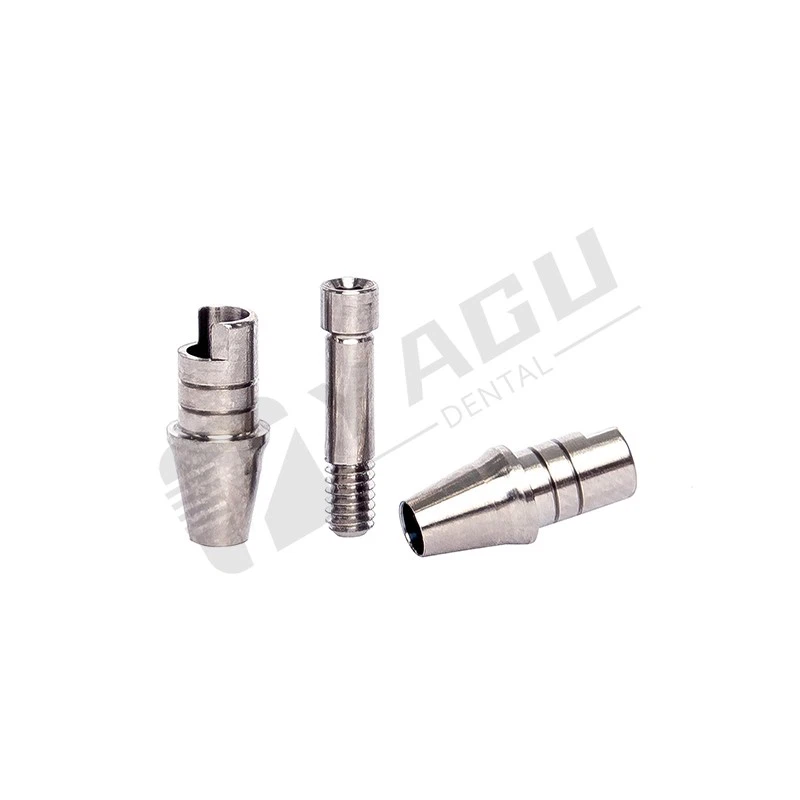
Some dental implant systems, like Megagen Ti Base, are designed with specific connection mechanisms to ensure a tight and stable fit. When considering using other materials with Nobel Ti Base, it is important to evaluate whether they can provide a similar level of mechanical stability. The shape, size, and surface characteristics of the materials must be carefully matched to ensure proper load transfer and long - term durability.
Biological Compatibility
Biological compatibility is perhaps the most critical factor in dental implantology. The body's response to the materials used in the implant can determine the success or failure of the procedure. Nobel Ti Base is highly biocompatible, which means that it is well - tolerated by the body and promotes osseointegration, the process by which the implant fuses with the surrounding bone.
However, when combined with other materials, there is a risk of an immune response. Some materials may release substances that can trigger an inflammatory reaction in the body. For example, certain polymers or composite materials may leach chemicals over time, which can cause irritation to the surrounding tissues and prevent proper osseointegration.
When selecting materials to be used with Nobel Ti Base, it is essential to choose those that are also biocompatible. Hiossen Tibase is a product that, like Nobel Ti Base, is likely to have a high level of biocompatibility. This reduces the risk of adverse biological reactions and increases the chances of a successful implant outcome.
Compatibility in the Manufacturing Process
In addition to the in - vivo compatibility issues, there are also considerations regarding the compatibility of Nobel Ti Base with other materials during the manufacturing process. Dental laboratories often need to fabricate custom components that will be used in conjunction with the Nobel Ti Base.
The materials used in the manufacturing process must be able to be machined, molded, or joined together effectively. For example, if a dental technician is creating a custom abutment to be used with the Nobel Ti Base, the material must be easy to shape and finish to the required specifications. Some materials may be difficult to machine, which can lead to inaccuracies in the final product.
Moreover, the bonding between the Nobel Ti Base and other components during manufacturing is crucial. If the bonding is not strong enough, the components may separate over time, leading to implant failure. Dental laboratories need to use appropriate bonding techniques and materials that are compatible with titanium to ensure a reliable connection.
Impact on Clinical Outcomes
The compatibility issues of Nobel Ti Base with other materials can have a significant impact on clinical outcomes. A successful dental implant should provide long - term functionality, aesthetics, and patient comfort. Incompatible materials can lead to a range of problems, including pain, inflammation, implant failure, and the need for additional surgical procedures.
For example, if a patient experiences pain or discomfort due to a compatibility issue, it can affect their quality of life and their ability to chew properly. In cases where implant failure occurs, the patient may need to undergo a more complex and invasive procedure to replace the implant, which can be costly and time - consuming.
On the other hand, when the materials are compatible, the chances of a successful implant outcome are significantly increased. The implant can function properly, and the patient can enjoy a natural - looking and comfortable smile for many years.
Conclusion
In conclusion, understanding the compatibility issues of Nobel Ti Base with other materials is essential for dental professionals, laboratory technicians, and patients. Chemical, mechanical, biological, and manufacturing - related compatibility factors all play a crucial role in the success of dental implant procedures.
As a supplier of Nobel Ti Base, I am committed to providing high - quality products and ensuring that our customers are well - informed about these compatibility issues. By choosing compatible materials and following best practices in dental implantology, we can help to achieve optimal clinical outcomes.
If you are interested in purchasing Nobel Ti Base or have any questions about its compatibility with other materials, I encourage you to contact me for a detailed discussion. We can work together to find the best solutions for your dental implant needs.
References
- Hench, L. L. (1991). Bioceramics: From concept to clinic. Journal of the American Ceramic Society, 74(7), 1487 - 1510.
- Albrektsson, T., & Wennerberg, A. (2004). Oral implant surfaces: Part 1 - Review focusing on topographic and chemical properties of different surfaces and in vitro responses to them. International Journal of Oral and Maxillofacial Implants, 19(Suppl), 5 - 15.
- Misch, C. E. (2008). Contemporary implant dentistry. Mosby.