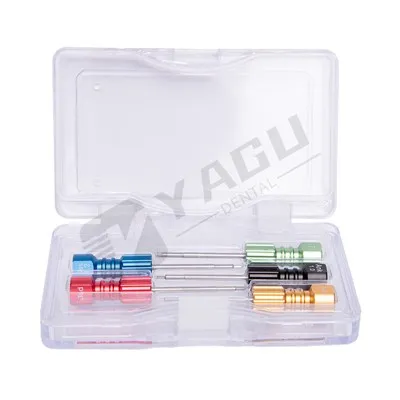
As a seasoned supplier of implant parts, I've witnessed firsthand the dynamic evolution of the dental implant industry. Over the years, the demand for high - quality implant components has soared, driven by technological advancements and an increasing awareness of dental health. In this blog, I'll delve into the common types of implant parts, shedding light on their functions, applications, and the latest trends in the market.
Dental Implant Body
The dental implant body is the foundation of the entire implant system. It is surgically placed into the jawbone, where it integrates with the bone tissue through a process called osseointegration. Made from biocompatible materials such as titanium, the implant body provides a stable base for the subsequent attachment of other components.
There are several designs of implant bodies available, each tailored to different anatomical and clinical requirements. For example, some implants have a tapered shape, which allows for easier insertion into the bone and better adaptation to the natural bone structure. Others feature a cylindrical design, providing excellent primary stability in dense bone.
Abutment
Abutments are crucial components that connect the implant body to the dental restoration, such as a crown, bridge, or denture. They play a vital role in determining the aesthetics and functionality of the final restoration.
One common type of abutment is the Ti Base Abutment. Made from titanium, it offers high strength and biocompatibility. Ti base abutments come in various shapes and sizes to accommodate different implant systems and restoration needs. They can be customized to achieve the optimal fit and alignment with the patient's natural dentition, ensuring a seamless and natural - looking smile.
Pre - angled abutments are also popular, especially in cases where the implant is not placed in an ideal position. These abutments can correct the angulation of the restoration, allowing for a more esthetic and functional outcome.
Healing Cap
Healing caps are used during the initial healing phase after implant placement. Their primary function is to protect the implant site and guide the soft tissue healing process. The Osstem Healing Cap is a well - known example in the market.
These caps are typically made of biocompatible materials like titanium or plastic. They come in different sizes and shapes to fit various implant systems. Healing caps prevent food debris and bacteria from entering the implant site, reducing the risk of infection. They also help in shaping the gingival tissue around the implant, which is essential for the long - term success and aesthetics of the final restoration.
Transfer Impression Coping
Transfer impression copings are used to accurately transfer the position and orientation of the implant in the patient's mouth to the dental laboratory. This is a critical step in the fabrication of the dental restoration.


The Osstem Transfer Impression Coping is a high - precision component that ensures an exact replica of the implant position in the impression. It allows the dental technician to fabricate a restoration that fits perfectly onto the implant. Transfer impression copings are designed to be easily attached and detached from the implant, facilitating a smooth and efficient impression - taking process.
Cover Screw
Cover screws are used to seal the implant after it has been placed in the jawbone. They are typically made of titanium and are designed to prevent the ingrowth of soft tissue into the implant during the healing period. Cover screws are essential for maintaining the integrity of the implant - bone interface and ensuring successful osseointegration.
Retention Screw
Retention screws are used to secure the abutment to the implant body and the dental restoration to the abutment. They are made of high - strength materials to withstand the forces of mastication. The proper torque of the retention screw is crucial to ensure the stability and longevity of the implant restoration. Over - tightening or under - tightening the screw can lead to complications such as screw loosening or fracture.
Trends in Implant Parts
In recent years, there has been a growing trend towards the development of more patient - specific implant parts. With the advancement of digital dentistry, it is now possible to create custom - made implant components based on the patient's unique anatomy. This not only improves the fit and function of the restoration but also enhances the overall patient experience.
Another trend is the use of advanced materials in implant parts. For example, zirconia is becoming increasingly popular as an alternative to titanium for abutments. Zirconia offers excellent aesthetics, as it has a natural tooth - like appearance, and it is also highly biocompatible.
Moreover, the integration of smart technology in implant parts is on the horizon. Imagine implant parts that can monitor the health of the implant - bone interface, detect early signs of infection, or provide real - time feedback on the patient's bite force. While this technology is still in its infancy, it holds great promise for the future of dental implantology.
Quality Assurance in Implant Parts
As a supplier of implant parts, quality assurance is of utmost importance. We adhere to strict manufacturing standards and quality control processes to ensure that every implant part we produce meets the highest levels of safety and performance.
All our products are made from high - quality materials that are thoroughly tested for biocompatibility and mechanical properties. We use state - of - the - art manufacturing equipment and techniques to ensure precision and consistency in production. Each implant part undergoes a series of inspections and tests before it is released to the market, including dimensional accuracy checks, surface finish analysis, and strength testing.
Why Choose Our Implant Parts
Our company is committed to providing the dental community with the best - in - class implant parts. We understand the critical role that these components play in the success of dental implant treatments.
Our product range is comprehensive, covering all the common types of implant parts mentioned above. Whether you need a simple healing cap or a custom - made abutment, we have the solution for you. We also offer competitive pricing without compromising on quality.
In addition, our customer service team is always ready to assist you. We can provide technical support, product information, and help you choose the right implant parts for your specific cases. We believe in building long - term partnerships with our customers based on trust and mutual success.
Conclusion
In conclusion, understanding the common types of implant parts is essential for dental professionals involved in implant dentistry. From the implant body to the final restoration, each component plays a crucial role in the success of the implant treatment.
As a leading supplier of implant parts, we are dedicated to staying at the forefront of the industry, offering innovative products and excellent customer service. If you are interested in purchasing high - quality implant parts or have any questions about our products, please feel free to contact us. We look forward to discussing your needs and helping you achieve the best possible outcomes for your patients.
References
- Misch CE. Contemporary Implant Dentistry. Mosby; 2008.
- Brånemark PI, Zarb GA, Albrektsson T. Tissue - Integrated Prostheses: Osseointegration in Clinical Dentistry. Quintessence Publishing; 1985.
- Carlsson GE. Clinical Dental Implantology. Blackwell Munksgaard; 2003.