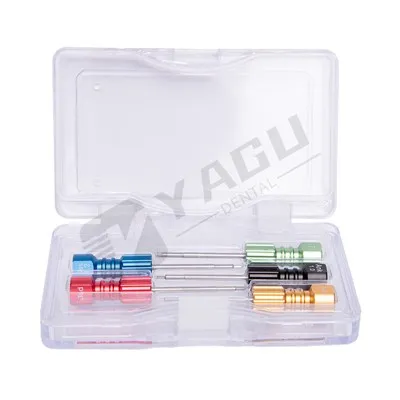
The use of titanium (Ti) base abutments in dental implantology has revolutionized the field by providing a reliable and biocompatible solution for restoring missing teeth. However, when dealing with patients who have a small jawbone, the application of Ti base abutments presents unique challenges that require careful consideration and innovative solutions. As a leading supplier of Ti base abutments, we have encountered these challenges firsthand and have developed effective strategies to overcome them. In this blog post, we will explore the challenges associated with using Ti base abutments in patients with a small jawbone and discuss the solutions we offer to address these issues.
Challenges of Using Ti Base Abutments in Patients with a Small Jawbone
Limited Space for Implant Placement
One of the primary challenges in patients with a small jawbone is the limited space available for implant placement. A small jawbone may have reduced width, height, or both, which can make it difficult to position the implant in an optimal location. This can lead to suboptimal implant stability and an increased risk of complications such as implant failure or bone resorption. Additionally, the limited space may also restrict the choice of abutment size and design, further complicating the restoration process.
Difficulty in Achieving Adequate Abutment Fit
Another challenge is achieving an adequate fit between the Ti base abutment and the implant. In patients with a small jawbone, the implant may be placed at a non - ideal angle or position due to the limited space. This can result in a misalignment between the abutment and the implant, leading to poor seating of the abutment and potential micro - leakage. Micro - leakage can allow bacteria to enter the implant - abutment interface, increasing the risk of peri - implantitis and other complications.
Aesthetic Concerns
Aesthetics are an important consideration in dental restorations. In patients with a small jawbone, achieving a natural - looking restoration can be particularly challenging. The limited space may not allow for the creation of a full - contour restoration, resulting in a less aesthetically pleasing outcome. Additionally, the position of the implant and abutment may be more visible, especially in the anterior region, which can further affect the overall appearance of the restoration.
Biomechanical Stress
The small jawbone may not be able to withstand the same amount of biomechanical stress as a larger jawbone. When a Ti base abutment is used, the forces applied during chewing and other oral functions are transferred from the restoration to the implant and the surrounding bone. In patients with a small jawbone, the increased stress concentration can lead to bone resorption and implant failure over time. The limited bone volume may also make it more difficult to distribute the forces evenly, increasing the risk of implant overload.
Solutions Offered by Our Company
Custom - Designed Abutments
To address the issue of limited space and non - ideal implant placement, we offer custom - designed Ti base abutments. Our team of experienced dental technicians uses advanced CAD/CAM technology to create abutments that are specifically tailored to the patient's unique anatomy. By taking into account the position, angle, and size of the implant, as well as the patient's occlusion and aesthetic requirements, we can design an abutment that fits perfectly and provides optimal support for the restoration. This not only improves the fit and stability of the abutment but also enhances the overall success rate of the implant restoration.
Precision Manufacturing
We understand the importance of achieving a precise fit between the abutment and the implant. That's why we use state - of - the - art manufacturing techniques to ensure the highest level of accuracy in our abutment production. Our manufacturing process includes strict quality control measures at every stage, from material selection to final finishing. This helps to minimize the risk of micro - leakage and ensures a secure connection between the abutment and the implant.
Aesthetic Solutions
For patients concerned about aesthetics, we offer a range of aesthetic options for our Ti base abutments. We can customize the shape, color, and surface texture of the abutment to match the natural teeth and gums, creating a more seamless and natural - looking restoration. In addition, we work closely with our clients to understand their aesthetic goals and provide personalized recommendations to achieve the best possible outcome.
Biomechanical Analysis
To address the issue of biomechanical stress, we conduct detailed biomechanical analysis of our abutments. Our engineers use advanced software to simulate the forces applied during normal oral functions and evaluate the stress distribution within the implant - abutment - bone complex. Based on the results of these analyses, we can optimize the design of the abutment to ensure that it can withstand the forces without causing excessive stress on the surrounding bone. This helps to improve the long - term stability and success of the implant restoration.
Our Product Range
In addition to our custom - designed Ti base abutments, we also offer a wide range of standard abutments and related products. Our product portfolio includes Castable Implant Abutment, which provides flexibility in the restoration process and allows for the creation of custom - made restorations. We also offer Dentium 14mm Premill Abutment, which is pre - milled to a specific size and shape, saving time and ensuring consistent quality. For laboratory use, we provide Dentium Lab Model Analog, which allows for accurate replication of the implant and abutment in the laboratory setting.


Contact Us for Purchase and Consultation
If you are facing the challenges of using Ti base abutments in patients with a small jawbone, we are here to help. Our team of experts has the knowledge and experience to provide you with the best solutions for your specific needs. Whether you are a dentist, a dental laboratory technician, or a distributor, we welcome you to contact us to discuss your requirements and explore our product range. We are committed to providing high - quality products and excellent customer service to support your success in dental implantology.
References
- Albrektsson, T., & Wennerberg, A. (2004). Oral implant surfaces: Part 1 - review focusing on topographical and chemical properties of different surfaces and in vivo responses to them. International Journal of Prosthodontics, 17(5), 536 - 543.
- Buser, D., Martin, W., & Belser, U. C. (2004). Optimizing esthetics for implant restorations in the anterior maxilla: Anatomic and surgical considerations. The International Journal of Oral & Maxillofacial Implants, 19(Suppl), 43 - 61.
- Cochran, D. L. (2001). The bone - implant interface: Development and regeneration. Periodontology 2000, 26(1), 98 - 120.