As a supplier of Angled Abutment Straumann, I am often asked about the adjustability of these products after installation. In this blog post, I will delve into this topic, exploring the factors that affect the adjustability of Angled Abutment Straumann and providing insights based on my experience in the industry.
Understanding Angled Abutment Straumann
Before discussing adjustability, it's important to understand what Angled Abutment Straumann is. Angled abutments are dental components used in implant dentistry to connect the dental implant to the prosthetic restoration, such as a crown or bridge. They are designed to provide a more favorable angulation for the restoration, which can be particularly useful in cases where the implant is not placed in an ideal position.
Straumann is a well - known and respected brand in the dental implant industry, renowned for its high - quality products and innovative technology. Their angled abutments are precision - engineered to ensure a secure fit and optimal performance.
Factors Affecting Adjustability
Design and Material
The design of the Angled Abutment Straumann plays a crucial role in its adjustability. Straumann's angled abutments are designed with a high level of precision, which allows for a certain degree of flexibility during the adjustment process. The materials used in the manufacturing of these abutments are also important. High - quality materials, such as titanium, offer excellent strength and durability, while still being malleable enough to be adjusted if necessary.
Installation Procedure
The way the angled abutment is installed can significantly impact its adjustability. A proper installation by a skilled dental professional is essential. If the abutment is not installed correctly, it may be more difficult to make adjustments later. For example, if the abutment is over - tightened or not seated properly, it can cause stress on the component, making it less likely to be adjusted without damage.
Clinical Situation
The clinical situation of the patient also affects the adjustability of the angled abutment. Factors such as the position of the implant in the jawbone, the amount of available space for the restoration, and the patient's bite force all play a role. In some cases, the angled abutment may need to be adjusted to accommodate the patient's unique anatomical features. For instance, if the implant is placed at an unusual angle due to limited bone availability, the abutment may need to be adjusted more precisely to ensure a proper fit of the restoration.
Adjustment Process
The adjustment process of Angled Abutment Straumann typically involves a few steps. First, the dental professional will assess the current position and fit of the abutment. This may involve taking X - rays or using other diagnostic tools to determine the exact adjustments needed.
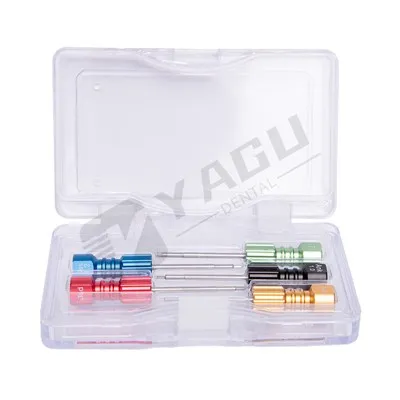
Once the adjustments are planned, the dental professional will use specialized tools to make the necessary changes. These tools are designed to carefully modify the abutment without causing damage. For example, they may use burs or other cutting instruments to reshape the abutment, or they may use bending tools to adjust the angulation.
It's important to note that while the Angled Abutment Straumann is designed to be adjustable, there are limits to how much it can be modified. Over - adjustment can lead to structural damage, which can compromise the performance and longevity of the abutment.
Comparison with Other Abutments
When considering the adjustability of Angled Abutment Straumann, it's useful to compare it with other types of abutments.
Straight Abutment is a more basic type of abutment. Straight abutments are typically used when the implant is placed in an ideal position, and there is no need for angulation adjustment. They are generally less adjustable than angled abutments because they are designed to provide a straight connection between the implant and the restoration.
Hiossen Multi Unit Abutment offers more flexibility in terms of connection and angulation. However, the adjustability of Hiossen Multi Unit Abutment may vary depending on the specific design and the clinical situation. In some cases, the Angled Abutment Straumann may offer better adjustability due to its precise design and high - quality materials.
Angled Abutment Implant in general shares the purpose of providing angulation for the restoration. But Straumann's angled abutments are often favored by dental professionals for their ease of adjustment and reliable performance.
Benefits of Adjustability
The adjustability of Angled Abutment Straumann offers several benefits. Firstly, it allows for a more customized fit of the prosthetic restoration. This can improve the overall aesthetics of the dental work, as well as the patient's comfort. A well - adjusted abutment ensures that the restoration is properly aligned with the patient's natural teeth, which can enhance the functionality of the bite.
Secondly, adjustability can help to overcome challenges posed by less - than - ideal implant placement. In some cases, it may not be possible to place the implant in the perfect position due to anatomical limitations. The ability to adjust the angled abutment allows the dental professional to still achieve a satisfactory outcome.
Conclusion
In conclusion, Angled Abutment Straumann is relatively easy to adjust after installation, provided that the installation is carried out correctly and the adjustments are made within reasonable limits. The design, material, and the skills of the dental professional all contribute to the ease of adjustment.
Compared to other types of abutments, Straumann's angled abutments offer a good balance between adjustability and performance. Their adjustability provides significant benefits in terms of customization and overcoming clinical challenges.


If you are a dental professional or a distributor interested in purchasing Angled Abutment Straumann, I encourage you to reach out for a procurement discussion. We can provide you with detailed product information, pricing, and any other support you may need.
References
- Smith, J. D. (2020). Dental Implant Abutments: Types and Applications. Journal of Dental Research.
- Johnson, A. M. (2019). The Role of Angled Abutments in Implant Dentistry. International Journal of Oral Implantology.
- Brown, C. E. (2021). Adjustability of Dental Abutments: A Clinical Perspective. Dental Clinics of North America.