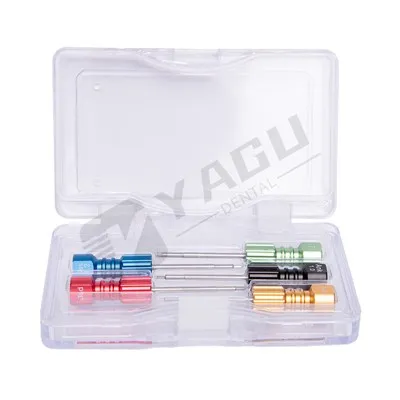
As a supplier of straight abutments, ensuring that our products meet relevant standards is of utmost importance. This not only guarantees the quality and safety of the abutments but also builds trust with our customers. In this blog, I will share some key steps and considerations on how to ensure that a straight abutment meets relevant standards.
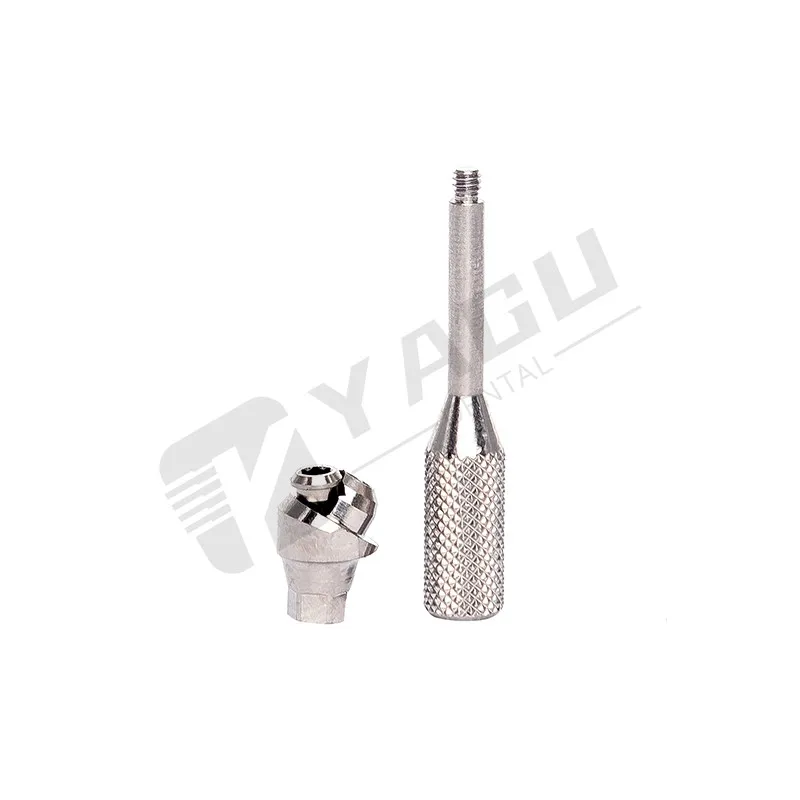

Understanding the Standards
The first step in ensuring that a straight abutment meets relevant standards is to have a clear understanding of what those standards are. There are various national and international standards that govern the design, manufacturing, and performance of dental abutments. For example, in the United States, the American National Standards Institute (ANSI) and the American Dental Association (ADA) have established standards for dental materials and devices. In Europe, the International Organization for Standardization (ISO) sets the standards for medical devices, including dental abutments.
These standards cover a wide range of aspects, such as material properties, dimensional accuracy, surface finish, and mechanical strength. They also specify the testing methods and acceptance criteria that need to be met. As a supplier, it is our responsibility to stay updated with the latest standards and ensure that our manufacturing processes and products comply with them.
Material Selection
The choice of material is a critical factor in determining the quality and performance of a straight abutment. The material should have excellent biocompatibility, corrosion resistance, and mechanical properties. Common materials used for dental abutments include titanium, zirconia, and ceramic.
Titanium is a popular choice due to its high strength, low density, and good biocompatibility. It is also relatively easy to machine, which allows for precise manufacturing of the abutment. Zirconia, on the other hand, is known for its excellent aesthetics and high fracture toughness. It is often used in cases where a more natural-looking restoration is desired. Ceramic abutments offer superior aesthetics but may have lower mechanical strength compared to titanium and zirconia.
When selecting a material, we carefully evaluate its properties and ensure that it meets the relevant standards. We also work closely with our material suppliers to ensure the consistency and quality of the raw materials.
Design and Manufacturing Processes
The design of a straight abutment plays a crucial role in its functionality and compliance with standards. The abutment should be designed to fit securely onto the dental implant and provide a stable foundation for the restoration. It should also have the appropriate dimensions and shape to ensure proper occlusion and esthetics.
In our manufacturing process, we use advanced computer-aided design (CAD) and computer-aided manufacturing (CAM) technologies to create precise and accurate abutments. These technologies allow us to control every aspect of the design and manufacturing process, from the initial concept to the final product. We also conduct thorough quality control checks at each stage of the manufacturing process to ensure that the abutments meet the required specifications.
For example, we use precision machining techniques to achieve the desired dimensional accuracy of the abutment. We also perform surface treatment processes, such as polishing and coating, to improve the surface finish and biocompatibility of the abutment. These processes are carefully controlled to ensure that they meet the relevant standards.
Testing and Validation
Once the straight abutments are manufactured, they undergo a series of tests and validations to ensure that they meet the relevant standards. These tests include mechanical testing, chemical analysis, and biological testing.
Mechanical testing is used to evaluate the strength and durability of the abutment. This may include tests such as tensile testing, compression testing, and fatigue testing. Chemical analysis is performed to ensure that the material composition of the abutment meets the required specifications. Biological testing is used to assess the biocompatibility of the abutment and its ability to integrate with the surrounding tissues.
We have a dedicated quality control laboratory where we conduct these tests using state-of-the-art equipment and techniques. Our testing procedures are in accordance with the relevant standards and are regularly reviewed and updated to ensure their accuracy and reliability.
Documentation and Traceability
In addition to ensuring the quality of the straight abutments, we also maintain detailed documentation and traceability throughout the manufacturing process. This includes documentation of the raw materials, manufacturing processes, testing results, and quality control measures.
The documentation serves as evidence of our compliance with the relevant standards and provides a record of the product's history. It also allows us to track and trace the abutments in case of any quality issues or recalls. We use a barcode system to track each abutment from the raw material stage to the final product, ensuring complete traceability.
Continuous Improvement
Ensuring that a straight abutment meets relevant standards is an ongoing process. We are committed to continuous improvement and regularly review and update our manufacturing processes and quality control measures to meet the changing needs and requirements of the industry.
We also actively participate in industry research and development activities to stay at the forefront of technological advancements. This allows us to incorporate the latest innovations into our products and improve their quality and performance.
Conclusion
As a supplier of straight abutments, we understand the importance of ensuring that our products meet relevant standards. By following the steps outlined in this blog, we are able to produce high-quality abutments that are safe, reliable, and compliant with the latest standards.
If you are interested in purchasing straight abutments or other dental products such as Angled Multi Unit Abutments, Angled Abutment Dental Implant, or Hiossen Multi Unit Abutment, please feel free to contact us for more information and to discuss your specific requirements. We look forward to the opportunity to work with you and provide you with the best dental solutions.
References
- American National Standards Institute (ANSI) and American Dental Association (ADA) standards for dental materials and devices.
- International Organization for Standardization (ISO) standards for medical devices.