Hey there! As a supplier of implant parts, I've seen firsthand how these nifty little components can have a big impact on a person's speech when used in relevant areas. Let's dive into how implant parts play a role in speech and why it matters.
First off, let's talk about what implant parts are. They're basically the building blocks for various types of implants, whether it's dental implants, cochlear implants, or other medical devices. In the context of speech, we're mainly focusing on dental implants here, but the principles can apply to other areas too.
Dental implants are a popular solution for people who've lost teeth. They consist of several parts, including the implant itself (which is placed in the jawbone), the abutment, and the dental crown. Each part plays a crucial role in restoring not only the appearance but also the function of the missing tooth, including speech.
When a person loses a tooth, it can have a significant impact on their speech. Missing teeth can cause gaps, which can lead to slurring or difficulty pronouncing certain sounds. For example, the front teeth are essential for making sounds like "f," "v," and "th." Without them, these sounds can become distorted.
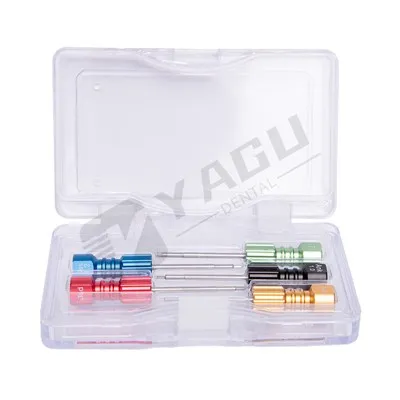
This is where implant parts come in. The Dentium Multi Unit Impression Coping is one such part that's used during the dental implant process. It helps in taking accurate impressions of the implant site, which is crucial for creating a custom - fit abutment and crown. A well - fitting implant restoration is key to normal speech. If the impression is inaccurate, the final restoration may not fit properly, leading to speech problems.
The Dentium Multi Unit Analog is another important part. It's used in the dental laboratory to replicate the implant in the mouth. This allows the dental technician to create the abutment and crown with precision. A precisely made abutment and crown ensure that the restored tooth functions just like a natural one, which is vital for clear speech.


Now, let's talk about the Pre Milled Abutment. These abutments are pre - fabricated to fit specific implant systems. They offer a quick and efficient solution for restoring teeth. A well - designed pre - milled abutment can support the dental crown in the correct position, which is essential for proper speech. If the abutment is not positioned correctly, it can cause the crown to be misaligned, affecting speech.
When an implant restoration is properly placed and functioning, it can significantly improve a person's speech. The restored tooth fills the gap, allowing for normal tongue movement and airflow. This means that sounds can be pronounced clearly, and the person can speak with confidence.
But it's not just about getting the right parts; proper installation is also crucial. A skilled dentist or oral surgeon needs to place the implant accurately in the jawbone. If the implant is placed at the wrong angle or depth, it can affect the fit of the abutment and crown, leading to speech issues.
Moreover, the material of the implant parts also matters. High - quality materials are more likely to provide a stable and long - lasting restoration. For example, titanium is a popular material for dental implants because it's biocompatible and strong. A strong implant can support the forces of chewing and speaking without shifting or breaking, which is essential for maintaining normal speech over time.
In addition to dental implants, other types of implants can also affect speech. Cochlear implants, for instance, are used to help people with hearing loss. They work by converting sound into electrical signals and transmitting them to the auditory nerve. When a cochlear implant is properly implanted and calibrated, it can improve a person's ability to hear and understand speech. This, in turn, can enhance their own speech production as they can better mimic the sounds they hear.
However, like dental implants, cochlear implants also rely on high - quality implant parts. The internal components of the cochlear implant need to be well - designed and manufactured to ensure optimal performance. Any malfunction or improper fit of these parts can lead to reduced hearing and speech difficulties.
Another area where implant parts can impact speech is in the case of maxillofacial implants. These are used to reconstruct the face after trauma or surgery. A well - placed maxillofacial implant can restore the normal shape and function of the facial structures, which is important for speech. For example, if the jawbone is properly reconstructed with the help of implants, it can support normal tongue and lip movement, which are essential for clear speech.
Now, as a supplier of implant parts, I understand the importance of providing high - quality products. We work closely with dental laboratories, dentists, and oral surgeons to ensure that our parts meet the highest standards. Our goal is to help improve the lives of patients by providing them with implant solutions that not only look good but also function well, especially when it comes to speech.
If you're in the market for implant parts, whether you're a dental professional or part of a medical team, I encourage you to reach out. We have a wide range of implant parts, including the ones I've mentioned above, and we're always happy to discuss your specific needs. You can contact us to start a conversation about how our products can benefit your patients and your practice.
In conclusion, implant parts play a crucial role in a person's speech when used in relevant areas. From dental implants to cochlear and maxillofacial implants, each part needs to be of high quality and properly installed to ensure optimal speech function. As a supplier, we're committed to providing the best implant parts to help improve the lives of those in need. So, don't hesitate to get in touch if you're interested in our products.
References
- Smith, J. (2018). Dental Implant Technology. Dental Press.
- Johnson, A. (2020). Cochlear Implants: Principles and Practice. Oxford University Press.
- Brown, C. (2019). Maxillofacial Reconstruction: Implant - Based Solutions. Springer.