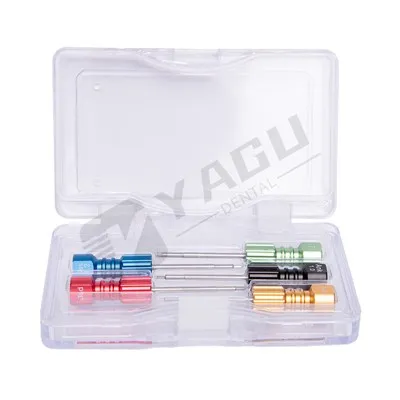
Periodontal disease is a prevalent oral health issue that affects a significant portion of the population. It is characterized by inflammation and infection of the supporting structures of the teeth, including the gums, periodontal ligament, and alveolar bone. When it comes to dental implants, the question of whether a particular implant system, such as Hiossen Tibase, can be used in patients with periodontal disease is of great importance. As a supplier of Hiossen Tibase, I aim to explore this topic in depth and provide valuable insights based on scientific evidence.
Understanding Periodontal Disease
Periodontal disease is primarily caused by the accumulation of plaque, a sticky film of bacteria that forms on the teeth. If not removed through proper oral hygiene practices, plaque can harden into tartar, which can only be removed by a dental professional. Over time, the bacteria in plaque and tartar can cause inflammation in the gums, leading to gingivitis. If left untreated, gingivitis can progress to periodontitis, which involves the destruction of the supporting structures of the teeth.
The severity of periodontal disease can vary from mild to severe, and it can have a significant impact on oral health and overall well - being. Symptoms of periodontal disease include bleeding gums, bad breath, loose teeth, and receding gums. In severe cases, it can lead to tooth loss.
Hiossen Tibase: An Overview
Hiossen Tibase is a well - known dental implant system. It is made of high - quality titanium, which has excellent biocompatibility, meaning it is well - tolerated by the body's tissues. The implant has a unique surface treatment that promotes osseointegration, the process by which the implant fuses with the surrounding bone. This is crucial for the long - term success of the implant.
The design of Hiossen Tibase is engineered to provide stability and support for the prosthetic restoration. It comes in various sizes and shapes to accommodate different clinical situations, allowing dentists to choose the most appropriate implant for each patient.
Can Hiossen Tibase be Used in Patients with Periodontal Disease?
The answer to this question is not straightforward and depends on several factors.
Mild to Moderate Periodontal Disease
In cases of mild to moderate periodontal disease, with proper treatment and management, Hiossen Tibase implants can potentially be used. Before implant placement, it is essential to control the periodontal infection. This typically involves a thorough periodontal treatment, such as scaling and root planing, which is a deep cleaning procedure to remove plaque and tartar from below the gumline.
Once the periodontal disease is under control, the patient's oral condition can be re - evaluated. If the bone loss is not excessive and the remaining bone has sufficient density and quality, Hiossen Tibase implants can be a viable option. The key is to ensure that the implant is placed in a healthy environment. The excellent osseointegration properties of Hiossen Tibase can help in these situations, as the implant can form a strong bond with the remaining bone.
Severe Periodontal Disease
In patients with severe periodontal disease, the situation is more complex. Severe periodontal disease often results in significant bone loss, which can make it challenging to achieve successful osseointegration. In such cases, additional procedures may be required.
Bone grafting is one option. If there is not enough bone to support the implant, bone graft material can be used to augment the bone volume. Hiossen Tibase implants can then be placed once the bone graft has healed and integrated. However, the success rate in these cases may be lower compared to patients with healthy periodontal tissues.
Another consideration is the long - term stability of the implant. Patients with a history of severe periodontal disease are at a higher risk of developing peri - implantitis, an inflammatory condition around the implant similar to periodontal disease. To minimize this risk, strict oral hygiene instructions and regular follow - up appointments are necessary.


Systemic Health and Periodontal Disease
It's also important to consider the patient's systemic health. Many patients with periodontal disease may have underlying systemic conditions such as diabetes, which can affect the body's ability to heal and the success of the implant. For example, patients with poorly controlled diabetes are at a higher risk of complications after implant placement. In these cases, close collaboration between the dentist, periodontist, and other healthcare providers is crucial to manage the patient's overall health and increase the chances of a successful implant procedure.
Complementary Products for Hiossen Tibase
When using Hiossen Tibase implants, there are several complementary products that can enhance the treatment outcome. For example, Dentium Closed Impression Coping is a useful tool for taking accurate impressions of the implant site. This is important for fabricating a well - fitting prosthetic restoration.
The Dentium Multi Unit Analog allows for the connection of multiple implants, which can be beneficial in cases where multiple teeth need to be replaced. It provides stability and support for the final restoration.
Dentium Healing Cap is used during the healing phase after implant placement. It helps protect the implant site and promotes proper tissue healing.
The Importance of a Comprehensive Treatment Plan
Regardless of the patient's periodontal condition, a comprehensive treatment plan is essential when considering Hiossen Tibase implants. This plan should involve a detailed evaluation of the patient's oral and systemic health, including a periodontal assessment, radiographic examination, and a review of the patient's medical history.
The treatment plan should also outline the steps for periodontal treatment (if necessary), implant placement, and the subsequent prosthetic restoration. Regular follow - up appointments are crucial to monitor the progress of osseointegration, check for any signs of complications, and ensure the long - term success of the implant.
Conclusion
In conclusion, Hiossen Tibase can potentially be used in patients with periodontal disease, but careful assessment and management are required. In mild to moderate cases, with proper periodontal treatment, the implants can have a high chance of success. In severe cases, additional procedures and long - term monitoring are necessary.
As a supplier of Hiossen Tibase, I am committed to providing high - quality products and supporting dental professionals in making the best treatment decisions for their patients. If you are a dental professional interested in learning more about Hiossen Tibase or discussing how it can be used in your patients with periodontal disease, I encourage you to reach out for further information and to start a procurement discussion. We can work together to ensure the best possible outcomes for your patients.
References
- Misch CE. Contemporary Implant Dentistry. Mosby; 2008.
- Lang NP, Tonetti MS. Periodontology 2000. Wiley - Blackwell; 2003.
- Branemark PI, Zarb GA, Albrektsson T. Tissue - Integrated Prostheses: Osseointegration in Clinical Dentistry. Quintessence Publishing; 1985.