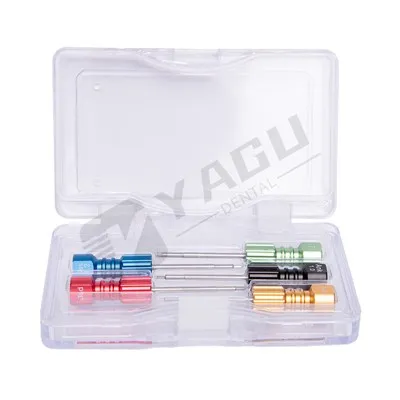
A temporary abutment is a crucial component in dental implant procedures, serving as an intermediate structure between the implant fixture and the final restoration. It plays a vital role in the healing process, soft - tissue management, and the overall success of the implant treatment. One common question that arises in the dental community is whether a temporary abutment can be used for multiple teeth. In this blog, as a supplier of temporary abutments, I will delve into this topic from various aspects, including the advantages, limitations, clinical considerations, and product - related information.
Advantages of Using a Temporary Abutment for Multiple Teeth
Cost - effectiveness
Using a single temporary abutment for multiple teeth can significantly reduce the overall cost of the implant procedure. Instead of purchasing multiple individual abutments for each tooth, a multi - tooth temporary abutment offers a more economical solution. This is particularly beneficial for patients on a budget or for dental clinics looking to optimize their costs without compromising the quality of treatment.
Time - saving
In a clinical setting, time is of the essence. Placing a single temporary abutment for multiple teeth can streamline the implant procedure. It reduces the number of steps involved in the placement process, such as screw tightening and abutment positioning for each tooth. This not only saves chair - time for the patient but also allows the dentist to complete the procedure more efficiently, increasing the overall productivity of the clinic.
Improved Aesthetics and Function
A multi - tooth temporary abutment can provide a more natural - looking and functional interim restoration. It helps in maintaining the proper spacing and alignment of the teeth during the healing phase. The patient can have a more stable bite and better esthetics, which is important for their confidence and daily life activities.
Limitations of Using a Temporary Abutment for Multiple Teeth
Fit and Adaptation
One of the main challenges of using a temporary abutment for multiple teeth is achieving a perfect fit and adaptation. Each tooth has its unique anatomical shape, position, and angulation. A multi - tooth temporary abutment may not precisely match the individual requirements of each tooth, which can lead to issues such as poor marginal adaptation, improper occlusion, and potential soft - tissue irritation.
Hygiene Concerns
Cleaning around a multi - tooth temporary abutment can be more challenging compared to individual abutments. The complex design and the presence of multiple teeth in a single unit can create areas where plaque and debris can accumulate. If not properly cleaned, this can increase the risk of peri - implantitis and other oral health problems.


Customization
It is often difficult to customize a multi - tooth temporary abutment to meet the specific needs of each patient. In cases where there are significant differences in tooth morphology or implant placement, a one - size - fits - all approach may not be suitable. This can limit the effectiveness of the temporary restoration and may require additional adjustments or even replacement.
Clinical Considerations
Patient Selection
Not all patients are suitable candidates for using a temporary abutment for multiple teeth. Factors such as the patient's oral hygiene habits, the condition of the supporting bone, and the position of the implants need to be carefully evaluated. Patients with good oral hygiene and healthy bone support are more likely to benefit from a multi - tooth temporary abutment.
Implant Placement
Proper implant placement is crucial when using a temporary abutment for multiple teeth. The implants should be placed in a parallel or nearly parallel position to ensure that the multi - tooth abutment can be easily seated. The angulation and depth of the implants need to be carefully planned to avoid any interference with the abutment placement.
Follow - up and Maintenance
Regular follow - up appointments are essential for patients with a multi - tooth temporary abutment. The dentist should monitor the fit, function, and hygiene of the abutment. Any signs of discomfort, inflammation, or poor adaptation should be addressed promptly to prevent complications.
Product - related Information
As a temporary abutment supplier, we offer a wide range of products to meet the diverse needs of dental professionals. Our products are designed with high - quality materials to ensure durability and biocompatibility.
For example, we provide the Osstem Transfer Impression Coping, which is an important accessory in the implant impression process. It helps in accurately transferring the position and angulation of the implant to the dental model, which is crucial for the fabrication of a well - fitting temporary abutment.
The Dentium Multi Unit Castable Abutment is another product in our portfolio. It is designed for multi - unit restorations and offers excellent strength and stability. This abutment can be used in cases where a temporary restoration for multiple teeth is required.
Our Hiossen Tibase is also a popular choice among dentists. It is made of high - grade titanium, which provides good biocompatibility and osseointegration. It can be used as a temporary or permanent abutment, depending on the clinical situation.
Conclusion
In conclusion, a temporary abutment can be used for multiple teeth, but it has both advantages and limitations. Dental professionals need to carefully evaluate each patient's case and consider the clinical factors before deciding whether to use a multi - tooth temporary abutment. As a supplier, we are committed to providing high - quality products and supporting dental professionals in making the best decisions for their patients.
If you are a dental professional interested in our temporary abutment products or have any questions about using a temporary abutment for multiple teeth, we encourage you to contact us for a detailed discussion and to explore potential procurement opportunities. We look forward to working with you to improve the quality of dental implant treatments.
References
- Misch, C. E. (2018). Dental Implant Prosthetics. Elsevier Health Sciences.
- Tarnow, D. P., et al. (2000). The effect of the distance from the contact point to the crest of bone on the presence or absence of the interproximal dental papilla. Journal of Periodontology, 71(3), 506 - 512.
- Buser, D., et al. (2004). Optimized planning and surgical placement of implant restorations. Quintessence Publishing Co., Inc.