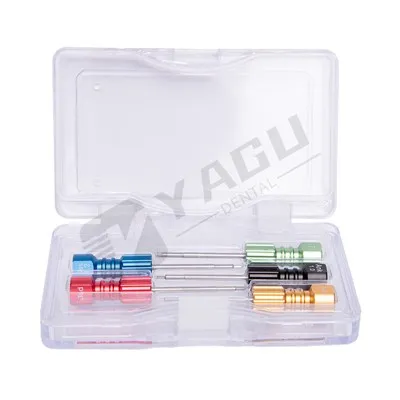
As a supplier of Nobel Temporary Abutments, I've encountered numerous inquiries regarding their suitability for patients with a gummy smile. This blog post aims to delve into this topic, exploring the feasibility, considerations, and potential benefits of using Nobel Temporary Abutments in such cases.
Understanding Gummy Smile
A gummy smile, medically known as excessive gingival display, is a condition where an excessive amount of gum tissue is visible when a person smiles. This can be caused by various factors, including short upper lip, hyperactive upper lip muscles, excessive vertical maxillary growth, or teeth that appear short due to genetic factors or wear. Gummy smiles can significantly impact a person's self - confidence and aesthetic appearance.
Nobel Temporary Abutments: An Overview
Nobel Temporary Abutments are an integral part of the dental implant process. They are designed to serve as a temporary connection between the dental implant and the future restoration. These abutments provide a stable platform for the fabrication of the final prosthesis while allowing for tissue healing and maturation around the implant site. They are made from high - quality materials, ensuring biocompatibility and durability during the healing phase.
Feasibility of Using Nobel Temporary Abutments in Gummy Smile Patients
Aesthetic Considerations
One of the primary concerns in using Nobel Temporary Abutments for gummy smile patients is aesthetics. Since a significant amount of gum tissue is visible in these patients, the appearance of the abutment can play a crucial role in the overall smile. Nobel Temporary Abutments come in various shapes and sizes, which can be selected to mimic the natural tooth - gum interface as closely as possible. This can help in creating a more aesthetically pleasing temporary restoration, even in the presence of a gummy smile.
Tissue Management
Gummy smile patients often have unique tissue characteristics. The excessive gum tissue may require careful management during the implant and abutment placement. Nobel Temporary Abutments can be used to guide the soft tissue healing and contouring. By selecting the appropriate abutment shape and size, it is possible to encourage the formation of a healthy and aesthetically pleasing gingival profile. For example, an abutment with a more convex shape can help to push the gum tissue into a more favorable position, reducing the excessive gingival display over time.
Functionality
Functionally, Nobel Temporary Abutments are designed to withstand the normal forces of chewing and biting during the healing phase. In gummy smile patients, the temporary restoration needs to function properly without causing any discomfort or irritation to the excessive gum tissue. The smooth surface and proper fit of Nobel Temporary Abutments ensure that they can perform their function effectively, even in the presence of a gummy smile.
Considerations When Using Nobel Temporary Abutments in Gummy Smile Patients
Gingival Biotype
The gingival biotype, which can be either thick or thin, plays a significant role in the success of using Nobel Temporary Abutments in gummy smile patients. Patients with a thin gingival biotype may be more prone to gingival recession and may require more careful abutment selection and placement. In contrast, patients with a thick gingival biotype may have better tissue support and may tolerate the abutment well. It is essential to assess the gingival biotype before choosing the appropriate Nobel Temporary Abutment.
Abutment Design
The design of the Nobel Temporary Abutment needs to be carefully considered in gummy smile patients. Abutments with a more sub - gingival design may be more suitable as they can help to mask the excessive gum tissue and create a more natural - looking transition from the gum to the tooth. Additionally, the emergence profile of the abutment should be chosen based on the patient's individual anatomy to ensure optimal aesthetics and tissue health.
Patient Expectations
It is crucial to have open and honest communication with the patient regarding the limitations and potential outcomes of using Nobel Temporary Abutments in the context of a gummy smile. Patients should be made aware that while the temporary abutment can improve the appearance to some extent, additional procedures such as gingivectomy or orthognathic surgery may be required to achieve a more significant reduction in the gummy smile.
Potential Benefits of Using Nobel Temporary Abutments in Gummy Smile Patients
Diagnostic and Treatment Planning
The use of Nobel Temporary Abutments can provide valuable information for diagnostic and treatment planning. By placing a temporary abutment, the dentist can assess the soft tissue response, the aesthetic outcome, and the functionality of the restoration. This information can be used to make more informed decisions regarding the final restoration and any additional procedures that may be necessary to address the gummy smile.
Patient Comfort
During the healing phase, Nobel Temporary Abutments can provide a comfortable and stable restoration for the patient. This is especially important for gummy smile patients, who may already be self - conscious about their appearance. A well - fitting temporary abutment can help to improve the patient's quality of life during the treatment process.


Cost - Effectiveness
Using Nobel Temporary Abutments can be a cost - effective option in the treatment of gummy smile patients. They allow for a temporary restoration to be placed while the patient decides on the most appropriate long - term treatment plan. This can help to avoid unnecessary expenses associated with immediate permanent restorations that may need to be modified later.
Comparison with Other Abutment Types
Dentium 14mm Premill Abutment
The Dentium 14mm Premill Abutment is another option available in the market. While it has its own advantages, such as pre - milled design for faster placement, Nobel Temporary Abutments offer more flexibility in terms of customization. The ability to select from a wider range of shapes and sizes makes Nobel Temporary Abutments more suitable for the complex anatomical requirements of gummy smile patients.
Casting Abutment
Casting Abutments are custom - made for each patient. However, the process of casting can be time - consuming and may not be as readily available as Nobel Temporary Abutments. Nobel Temporary Abutments provide a quicker solution, which is beneficial for patients who want to start the treatment process without delay.
Ti Base Abutment
The Ti Base Abutment is known for its strength and stability. However, in terms of aesthetics, Nobel Temporary Abutments may offer better options for gummy smile patients. The variety of shapes and colors available in Nobel Temporary Abutments can help to achieve a more natural - looking appearance, which is crucial in cases where a significant amount of gum tissue is visible.
Conclusion
In conclusion, Nobel Temporary Abutments can be used in patients with a gummy smile, but careful consideration of various factors is necessary. From aesthetic and tissue management to patient expectations, each aspect plays a vital role in the success of using these abutments. While they offer several benefits, such as diagnostic value, patient comfort, and cost - effectiveness, it is important to compare them with other abutment types to make the best choice for the patient.
If you are a dental professional interested in exploring the use of Nobel Temporary Abutments for your gummy smile patients, I encourage you to reach out to discuss your specific needs. We can provide you with detailed information, product samples, and support to ensure the best possible treatment outcomes for your patients.
References
- Sarment DP, et al. "Soft tissue management around dental implants." Journal of Oral Implantology.
- Tarnow DP, et al. "The effect of the distance from the contact point to the crest of bone on the presence or absence of the interproximal dental papilla." Journal of Periodontology.
- Buser D, et al. "Clinical approaches to optimize esthetics in implant dentistry: anatomic and surgical considerations." The International Journal of Oral & Maxillofacial Implants.