Can a Castable Implant Abutment be used in posterior teeth?
As a supplier of castable implant abutments, I often receive inquiries from dental professionals regarding the suitability of these abutments for posterior teeth. This blog post aims to explore this topic in depth, providing scientific insights and practical considerations to help you make an informed decision.
Understanding Castable Implant Abutments
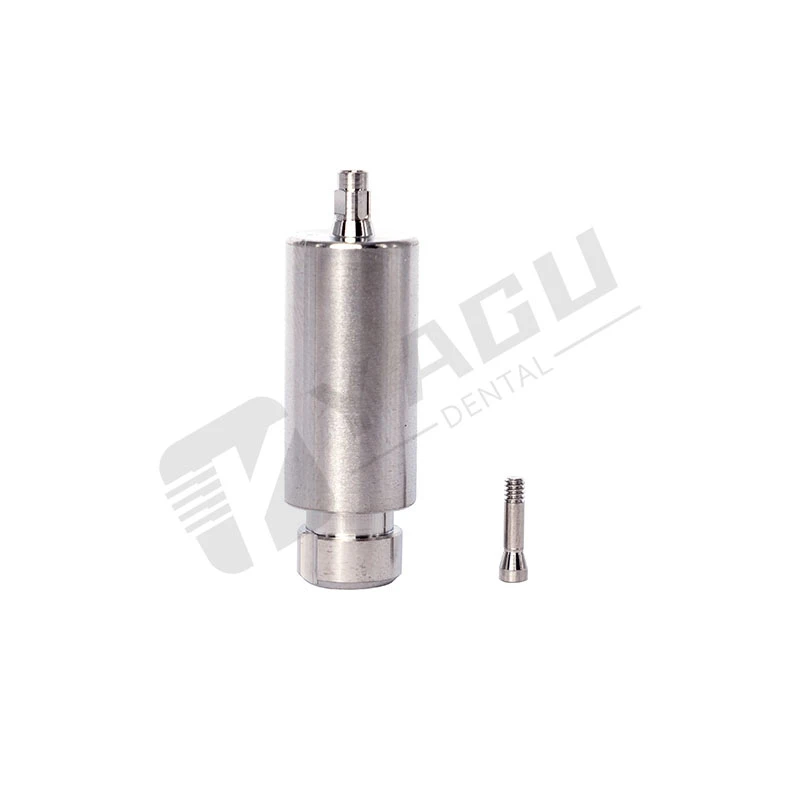
Castable implant abutments are custom-made components that are used to connect dental implants to the final restoration, such as a crown or bridge. They are typically fabricated using a lost-wax casting technique, which allows for precise customization to match the patient's unique anatomy and restoration requirements.
One of the key advantages of castable implant abutments is their ability to provide a high degree of flexibility in terms of design and customization. This is particularly important in the posterior region of the mouth, where the occlusal forces are higher and the anatomical variations are more complex. By using a castable abutment, the dentist can optimize the fit, shape, and alignment of the restoration, ensuring optimal function and aesthetics.
Advantages of Using Castable Implant Abutments in Posterior Teeth
- Customization: As mentioned earlier, castable implant abutments can be customized to fit the specific needs of each patient. This is crucial in the posterior teeth, where the occlusal forces are greater and the anatomical variations are more pronounced. By customizing the abutment, the dentist can ensure a precise fit, which helps to distribute the occlusal forces evenly and reduce the risk of implant failure.
- Aesthetics: Castable implant abutments can be designed to mimic the natural shape and color of the surrounding teeth, providing a more aesthetically pleasing result. This is especially important in the posterior region, where the teeth are more visible during smiling and speaking.
- Strength and Durability: Castable implant abutments are typically made from high-quality materials, such as titanium or zirconia, which offer excellent strength and durability. This is essential in the posterior teeth, where the occlusal forces are higher and the abutment needs to withstand the stress of chewing and biting.
- Biocompatibility: Castable implant abutments are made from biocompatible materials, which means they are well-tolerated by the body and do not cause any adverse reactions. This is important for long-term success and patient comfort.
Considerations When Using Castable Implant Abutments in Posterior Teeth
- Technical Expertise: Fabricating a castable implant abutment requires a high level of technical expertise and precision. The dentist and the dental laboratory technician need to work closely together to ensure that the abutment is designed and fabricated correctly. Any errors in the design or fabrication process can lead to a poor fit, which can increase the risk of implant failure.
- Cost: Castable implant abutments are typically more expensive than prefabricated abutments. This is due to the additional time and labor required for customization. However, the cost may be justified by the benefits of a better fit, aesthetics, and long-term success.
- Treatment Time: The fabrication of a castable implant abutment can take longer than a prefabricated abutment. This may result in a longer treatment time for the patient. However, the additional time may be worth it to ensure a better fit and aesthetics.
Comparison with Other Types of Abutments
- Prefabricated Abutments: Prefabricated abutments are pre-made components that are available in a variety of sizes and shapes. They are typically less expensive and can be placed more quickly than castable abutments. However, they may not provide the same level of customization as castable abutments, which can result in a less precise fit and potentially higher risk of implant failure.
- CAD/CAM Milled Abutments: CAD/CAM milled abutments are fabricated using computer-aided design and manufacturing technology. They offer a high level of precision and customization, similar to castable abutments. However, they may be more expensive and require specialized equipment and software.
Case Studies
To illustrate the effectiveness of castable implant abutments in posterior teeth, let's look at a few case studies.

Case Study 1: A 45-year-old male patient presented with a missing second molar in the left posterior region. An implant was placed, and a castable implant abutment was fabricated to connect the implant to a crown. The abutment was customized to match the patient's natural tooth anatomy and occlusal forces. After a period of healing, the crown was placed, and the patient reported excellent function and aesthetics. The implant and abutment have remained stable and functional for over two years.
Case Study 2: A 52-year-old female patient presented with a missing first molar in the right posterior region. An implant was placed, and a prefabricated abutment was initially used. However, the patient experienced discomfort and a poor fit. The prefabricated abutment was replaced with a castable implant abutment, which was customized to fit the patient's specific needs. After the replacement, the patient reported significant improvement in comfort and function. The implant and abutment have remained stable and functional for over one year.
Conclusion
In conclusion, castable implant abutments can be a viable option for posterior teeth. They offer a high level of customization, aesthetics, strength, and durability, which are essential for long-term success in the posterior region. However, they require a high level of technical expertise and may be more expensive and time-consuming than other types of abutments. When considering the use of castable implant abutments in posterior teeth, it is important to weigh the benefits against the costs and to consult with a qualified dental professional.
If you are interested in learning more about our castable implant abutments or would like to discuss your specific needs, please feel free to contact us. We would be happy to assist you in making an informed decision and providing you with the highest quality products and services.
References
- Misch CE. Contemporary Implant Dentistry. Mosby; 2008.
- Tarnow DP, Elian N, Fletcher P. The effect of the distance from the contact point to the crest of bone on the presence or absence of the interproximal dental papilla. J Periodontol. 2003;74(9):1235-1242.
- Zitzmann NU, Marinello CP. A systematic review of the survival and complication rates of implant-supported fixed dental prostheses (FDPs) after a mean observation period of at least 5 years. Clin Oral Implants Res. 2008;19 Suppl 4:22-34.