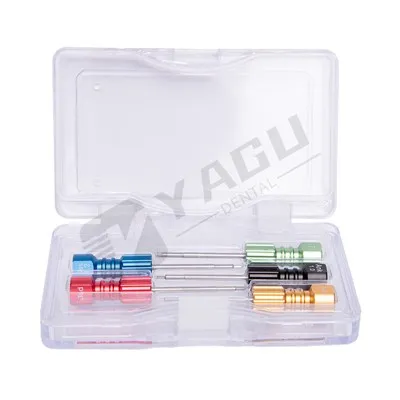
Can a Bone Chip Maker be used for making bone - derived supplements?
As a supplier of Bone Chip Makers, I often encounter inquiries about the diverse applications of our products. One question that has piqued my interest recently is whether a Bone Chip Maker can be used for making bone - derived supplements. In this blog, I'll delve into this topic, exploring the scientific aspects, potential uses, and limitations.
Understanding the Bone Chip Maker
Before we discuss its application in making bone - derived supplements, let's first understand what a Bone Chip Maker is. A Bone Chip Maker is a specialized tool, typically used in the dental and orthopedic fields. Its primary function is to harvest bone chips from the patient's own body during surgical procedures. These bone chips are then used for bone grafting, which helps in the regeneration of bone tissue at the site of injury or defect. You can learn more about our Bone Chip Maker on our website Bone Chip Maker.
The Science behind Bone - Derived Supplements
Bone - derived supplements are products that contain nutrients and bioactive components extracted from bones. These supplements are often rich in calcium, phosphorus, collagen, and other minerals and proteins that are beneficial for bone health. Calcium and phosphorus are essential for maintaining bone density, while collagen provides the structural framework for bones.
Can a Bone Chip Maker be used for making bone - derived supplements?
Theoretically, a Bone Chip Maker can be used to obtain bone chips that could potentially be used in the production of bone - derived supplements. However, there are several factors that need to be considered.
1. Source of Bones
In the context of a Bone Chip Maker, the bones are usually harvested from the patient during a surgical procedure. For the production of supplements, using human bones is not a viable option due to ethical and legal concerns. Therefore, if we were to use a Bone Chip Maker for supplement production, the bones would likely need to come from animals, such as cows or pigs.
2. Processing Requirements
Making bone - derived supplements involves more than just obtaining bone chips. The bone chips need to be processed to extract the beneficial components. This may include steps such as cleaning, defatting, demineralization, and enzymatic digestion. A Bone Chip Maker is designed to harvest bone chips, not to perform these advanced processing steps. Specialized equipment and facilities are required for the proper processing of bones into supplements.
3. Quality and Safety
Ensuring the quality and safety of bone - derived supplements is of utmost importance. The bones used must be free from contaminants, such as bacteria, viruses, and heavy metals. When using a Bone Chip Maker in a clinical setting, the focus is on the sterility of the bone chips for immediate use in the patient. For supplement production, additional quality control measures need to be in place to meet regulatory standards.
Potential Benefits of Using a Bone Chip Maker in Supplement Production
Despite the challenges, there are some potential benefits of using a Bone Chip Maker in the production of bone - derived supplements.
1. Precision Harvesting
A Bone Chip Maker allows for precise harvesting of bone chips. This can be beneficial in ensuring that the bones used in supplement production are of high quality and free from unwanted tissue.
2. Customization
The ability to harvest bone chips in a controlled manner using a Bone Chip Maker may allow for the customization of the bone - derived supplements. Different types of bones or specific regions of bones can be targeted to obtain a specific composition of nutrients and bioactive components.
Challenges and Limitations
As mentioned earlier, there are several challenges and limitations associated with using a Bone Chip Maker for making bone - derived supplements.


1. Regulatory Hurdles
The production of bone - derived supplements is subject to strict regulations. Obtaining the necessary approvals and complying with regulatory requirements can be a complex and time - consuming process.
2. Cost
Investing in the additional equipment and facilities required for processing bone chips into supplements can be costly. This may make it less economically viable for some manufacturers.
Other Related Dental Tools
In the dental field, there are other tools that are used in conjunction with the Bone Chip Maker. For example, Implant Screw Drivers and Dental Implant Screwdriver are essential for the placement of dental implants. These tools work together to ensure the successful outcome of dental procedures.
Conclusion
While a Bone Chip Maker has the potential to be used in the production of bone - derived supplements, there are significant challenges and limitations that need to be overcome. The ethical, legal, processing, and regulatory aspects all need to be carefully considered. However, with further research and development, it may be possible to find innovative ways to utilize the precision harvesting capabilities of a Bone Chip Maker in the supplement industry.
If you are interested in learning more about our Bone Chip Maker or other dental tools, or if you have any questions regarding the potential use of these tools in your business, we invite you to contact us for a procurement discussion. We are committed to providing high - quality products and excellent customer service.
References
- American Dental Association. (2023). Guidelines for Dental Implant Procedures.
- National Institutes of Health. (2023). Bone Health and Osteoporosis.
- Food and Drug Administration. (2023). Regulations for Dietary Supplements.