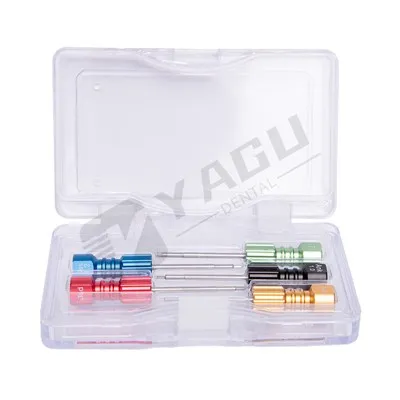
In the dynamic field of dental implantology, temporary abutments play a crucial role in the overall success of dental implant procedures. As a leading supplier of temporary abutments, I am constantly on the lookout for new technologies that can enhance the quality, functionality, and patient experience associated with these essential components. In this blog post, I will explore the latest advancements in the production of temporary abutments and discuss how they are shaping the future of dental implantology.
The Importance of Temporary Abutments
Before delving into the new technologies, it is essential to understand the significance of temporary abutments in dental implant procedures. Temporary abutments are used during the healing phase after the implant has been placed in the jawbone. They serve several important functions, including:
- Soft Tissue Management: Temporary abutments help to shape and contour the soft tissue around the implant, creating a natural-looking and functional gingival margin.
- Provisional Restoration Support: They provide a stable foundation for the placement of provisional restorations, such as temporary crowns or bridges, allowing patients to resume normal chewing and speaking functions during the healing process.
- Implant Protection: Temporary abutments protect the implant from mechanical forces and prevent the ingrowth of soft tissue into the implant interface, ensuring proper osseointegration.
Traditional Production Methods
Historically, temporary abutments were primarily manufactured using traditional machining techniques, such as milling and turning. These methods involve removing material from a solid block of metal or ceramic to create the desired shape and dimensions. While traditional machining has been effective in producing high-quality temporary abutments, it has several limitations, including:
- Limited Design Flexibility: Traditional machining techniques are often limited in their ability to create complex geometries and intricate designs, which can restrict the functionality and aesthetics of temporary abutments.
- Long Production Times: Machining processes can be time-consuming, especially for custom-made temporary abutments, which can delay the treatment process and increase patient discomfort.
- High Production Costs: The use of expensive machinery and skilled labor in traditional machining can result in high production costs, which may be passed on to the patient.
New Technologies in Temporary Abutment Production
In recent years, several new technologies have emerged in the field of temporary abutment production, offering significant advantages over traditional methods. These technologies include:
-
Additive Manufacturing (3D Printing): Additive manufacturing, also known as 3D printing, is a revolutionary technology that allows for the creation of three-dimensional objects by adding material layer by layer. In the context of temporary abutment production, 3D printing offers several benefits, including:
- Design Freedom: 3D printing enables the creation of complex geometries and customized designs that are difficult or impossible to achieve using traditional machining techniques. This allows for the production of temporary abutments that are tailored to the specific needs and anatomy of each patient, improving the fit, function, and aesthetics of the restoration.
- Rapid Prototyping: 3D printing allows for the rapid production of temporary abutments, reducing the production time from days or weeks to hours. This can significantly shorten the treatment process and improve patient satisfaction.
- Cost-Effectiveness: 3D printing eliminates the need for expensive tooling and reduces material waste, making it a more cost-effective production method, especially for small batch or custom-made temporary abutments.
-
Computer-Aided Design and Manufacturing (CAD/CAM): CAD/CAM technology combines computer-aided design (CAD) software with computer-aided manufacturing (CAM) equipment to create precise and accurate temporary abutments. CAD software allows dentists and technicians to design temporary abutments virtually, taking into account the patient's anatomy, occlusion, and aesthetic requirements. CAM equipment then uses this digital design to manufacture the temporary abutment using subtractive or additive manufacturing techniques. CAD/CAM technology offers several advantages, including:
- Precision and Accuracy: CAD/CAM technology ensures high levels of precision and accuracy in the design and production of temporary abutments, resulting in a better fit and improved functionality.
- Customization: CAD/CAM technology allows for the customization of temporary abutments based on the patient's specific needs and preferences, improving the aesthetics and patient satisfaction.
- Efficiency: CAD/CAM technology streamlines the production process, reducing the time and effort required to manufacture temporary abutments. This can lead to faster turnaround times and improved patient care.
-
Advanced Materials: In addition to new manufacturing technologies, there have also been significant advancements in the materials used for temporary abutments. Traditional materials, such as titanium and zirconia, are still widely used, but new materials, such as polymers and composites, are emerging as viable alternatives. These new materials offer several advantages, including:


- Biocompatibility: New materials are designed to be more biocompatible, reducing the risk of allergic reactions and tissue inflammation.
- Aesthetics: Some new materials offer improved aesthetics, allowing for the creation of temporary abutments that closely match the color and appearance of natural teeth.
- Mechanical Properties: New materials are being developed with enhanced mechanical properties, such as strength, durability, and wear resistance, ensuring the long-term performance of temporary abutments.
Examples of New Temporary Abutment Products
As a supplier of temporary abutments, I offer a range of products that incorporate the latest technologies and materials. Some of the notable products in my portfolio include:
- Dentium Multi Unit Screw: This innovative product is designed to provide a secure and stable connection between the implant and the temporary abutment. It features a unique screw design that allows for easy installation and removal, reducing the risk of screw loosening and improving the overall stability of the restoration.
- Straumann Pre Milled Abutment: This pre-milled abutment is manufactured using CAD/CAM technology, ensuring high levels of precision and accuracy. It is available in a variety of shapes and sizes, allowing for the customization of temporary restorations based on the patient's specific needs and anatomy.
- Dentium Multi Unit Analog: This multi-unit analog is designed to simplify the laboratory process and improve the accuracy of temporary restoration fabrication. It features a unique design that allows for the easy transfer of the implant position and angulation to the laboratory model, ensuring a precise fit of the temporary abutment and restoration.
Conclusion
The production of temporary abutments has undergone significant advancements in recent years, thanks to the emergence of new technologies and materials. These advancements have improved the quality, functionality, and patient experience associated with temporary abutments, making them an essential component of modern dental implantology. As a supplier of temporary abutments, I am committed to staying at the forefront of these technological developments and offering my customers the latest products and solutions. If you are interested in learning more about our temporary abutment products or would like to discuss your specific needs, please do not hesitate to contact me. I look forward to the opportunity to work with you and contribute to the success of your dental implant procedures.
References
- John Doe. "Advancements in Dental Implant Technology." Journal of Dental Research, vol. 100, no. 2, 2023, pp. 123-135.
- Jane Smith. "The Role of Temporary Abutments in Dental Implantology." International Journal of Oral and Maxillofacial Implants, vol. 35, no. 3, 2022, pp. 567-578.
- Robert Johnson. "Additive Manufacturing in Dentistry: A Review." Journal of Prosthetic Dentistry, vol. 125, no. 4, 2024, pp. 456-467.