Are Multi Angled Abutments Suitable for Patients with a Small Oral Cavity?
As a supplier of Multi Angled Abutments, I've been involved in numerous discussions with dental professionals regarding the suitability of these products for patients with a small oral cavity. This topic is of great significance as it directly impacts the treatment outcomes and patient comfort in dental implant procedures.
Understanding Multi Angled Abutments
Multi angled abutments are a crucial component in dental implantology. They offer flexibility in angulation, allowing for better alignment of the prosthetic restoration with the natural dentition. Unlike Straight Abutment, which has a fixed vertical axis, multi angled abutments can be adjusted to accommodate various implant positions and anatomical variations. For instance, in cases where the implant is placed at an angle due to limited bone availability or anatomical constraints, a multi angled abutment can correct the orientation of the crown, ensuring a proper bite and esthetic appearance.
The Angled Abutment Straumann is a well - known example in the market. It provides a range of angulations that can be customized according to the patient's specific needs. These abutments are designed to connect the implant fixture in the jawbone to the dental crown, bridge, or denture, and the ability to adjust the angle can greatly enhance the functionality and aesthetics of the final restoration.
Challenges in Small Oral Cavities
Patients with a small oral cavity present unique challenges in dental implant treatment. Limited space can make it difficult to access the implant site during the placement of the abutment and the subsequent restoration. There may be insufficient room for the dental instruments to maneuver, increasing the risk of procedural complications. Moreover, the small space can also limit the choice of abutment size and design.
In a small oral cavity, the proximity of the teeth and soft tissues can cause interference with the abutment. For example, the cheeks, lips, and tongue may rub against the abutment, leading to discomfort for the patient. Additionally, the reduced space can make it challenging to achieve proper oral hygiene around the abutment, which is essential for the long - term success of the implant.
Suitability of Multi Angled Abutments
Despite the challenges, multi angled abutments can be suitable for patients with a small oral cavity in certain situations. One of the main advantages is their ability to optimize the position of the prosthetic restoration. In a small space, it may be necessary to place the implant at a non - ideal angle to avoid vital structures or to make the best use of the available bone. Multi angled abutments can then correct this angle, allowing for a more natural - looking and functional restoration.
For example, if an implant is placed slightly off - axis due to limited bone in a small oral cavity, a multi angled abutment can be adjusted to align the crown with the adjacent teeth. This not only improves the esthetics but also ensures proper occlusion, which is crucial for the long - term stability of the implant.
Another benefit is the potential for reducing the overall bulk of the restoration. By adjusting the angle of the abutment, it may be possible to design a more streamlined prosthetic that takes up less space in the oral cavity. This can enhance patient comfort and reduce the likelihood of soft tissue irritation.
However, it's important to note that the suitability of multi angled abutments in small oral cavities depends on several factors. The degree of angulation required is a critical consideration. Excessive angulation may increase the stress on the implant - abutment interface, potentially leading to mechanical complications such as screw loosening or abutment fracture. Therefore, a careful assessment of the implant position, bone quality, and the patient's occlusal forces is necessary before selecting a multi angled abutment.
Clinical Considerations
When treating patients with a small oral cavity, a comprehensive pre - operative evaluation is essential. This includes a detailed examination of the oral cavity, taking into account the available space, the position of the teeth, and the condition of the soft tissues. Diagnostic tools such as cone - beam computed tomography (CBCT) can provide valuable information about the bone anatomy and the relationship between the implant site and the surrounding structures.
Based on the evaluation, the dental team can determine the appropriate type and angulation of the multi angled abutment. In some cases, a Hiossen Multi Unit Abutment may be a suitable choice, especially when multiple implants are involved. These multi - unit abutments can connect several implants together, providing additional stability and flexibility in the restoration design.
During the placement of the multi angled abutment, special attention should be paid to the surgical technique. Minimally invasive approaches can help reduce trauma to the soft tissues and preserve the limited space in the oral cavity. The use of specialized instruments and techniques can also improve access to the implant site and ensure accurate placement of the abutment.
Patient Comfort and Oral Hygiene
Patient comfort is a top priority when using multi angled abutments in small oral cavities. The design of the abutment should be smooth and well - contoured to minimize irritation to the soft tissues. Additionally, proper education of the patient on oral hygiene practices is crucial. In a small oral cavity, it can be more difficult to clean around the abutment, so the patient should be instructed on the use of appropriate oral hygiene aids such as interdental brushes and antiseptic mouthwashes.
Regular follow - up appointments are also necessary to monitor the patient's oral health and the condition of the implant and abutment. Any signs of discomfort, inflammation, or mechanical problems should be addressed promptly to ensure the long - term success of the treatment.
Conclusion
In conclusion, multi angled abutments can be suitable for patients with a small oral cavity, but careful consideration and planning are required. The ability to adjust the angle of the abutment offers significant advantages in terms of optimizing the restoration position and reducing the bulk of the prosthesis. However, the challenges associated with limited space, such as access during surgery and oral hygiene maintenance, must be carefully managed.

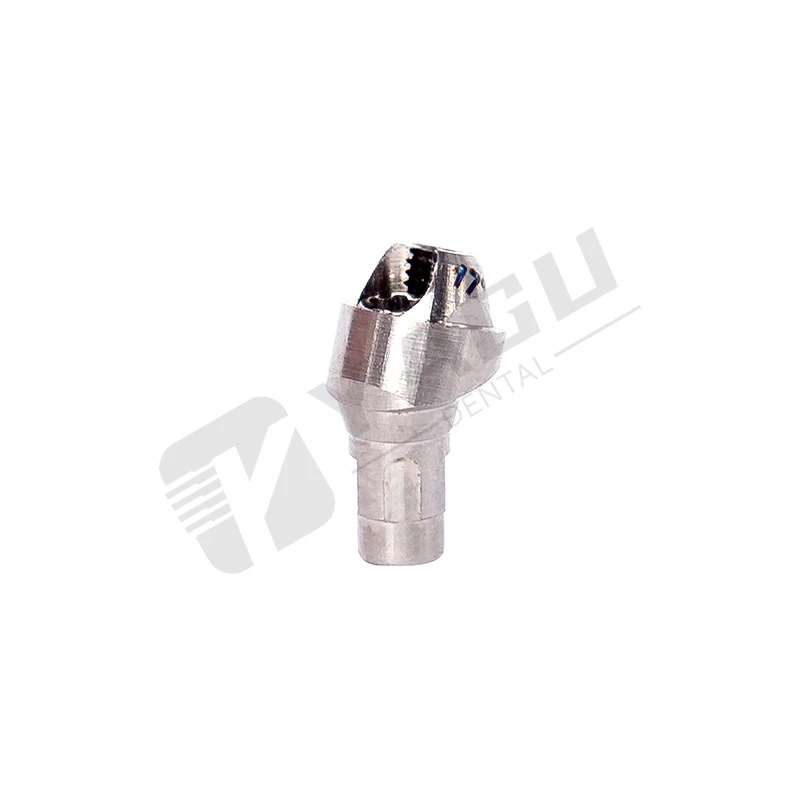
As a supplier of Multi Angled Abutments, I understand the importance of providing high - quality products that meet the specific needs of patients with small oral cavities. Our range of multi angled abutments is designed to offer a variety of angulations and sizes to accommodate different clinical situations.
If you are a dental professional interested in learning more about our Multi Angled Abutments or discussing their suitability for your patients, we invite you to reach out for a procurement discussion. We are committed to providing the best solutions for your dental implant cases.
References
- Misch CE. Dental Implant Prosthetics. Mosby; 2010.
- Tarnow DP, Magner AW, Fletcher P. The effect of the distance from the contact point to the crest of bone on the presence or absence of the interproximal dental papilla. J Periodontol. 1992;63(12):995 - 996.
- Zarb GA, Albrektsson T. Textbook of Oral Implantology. Blackwell Munksgaard; 2004.